
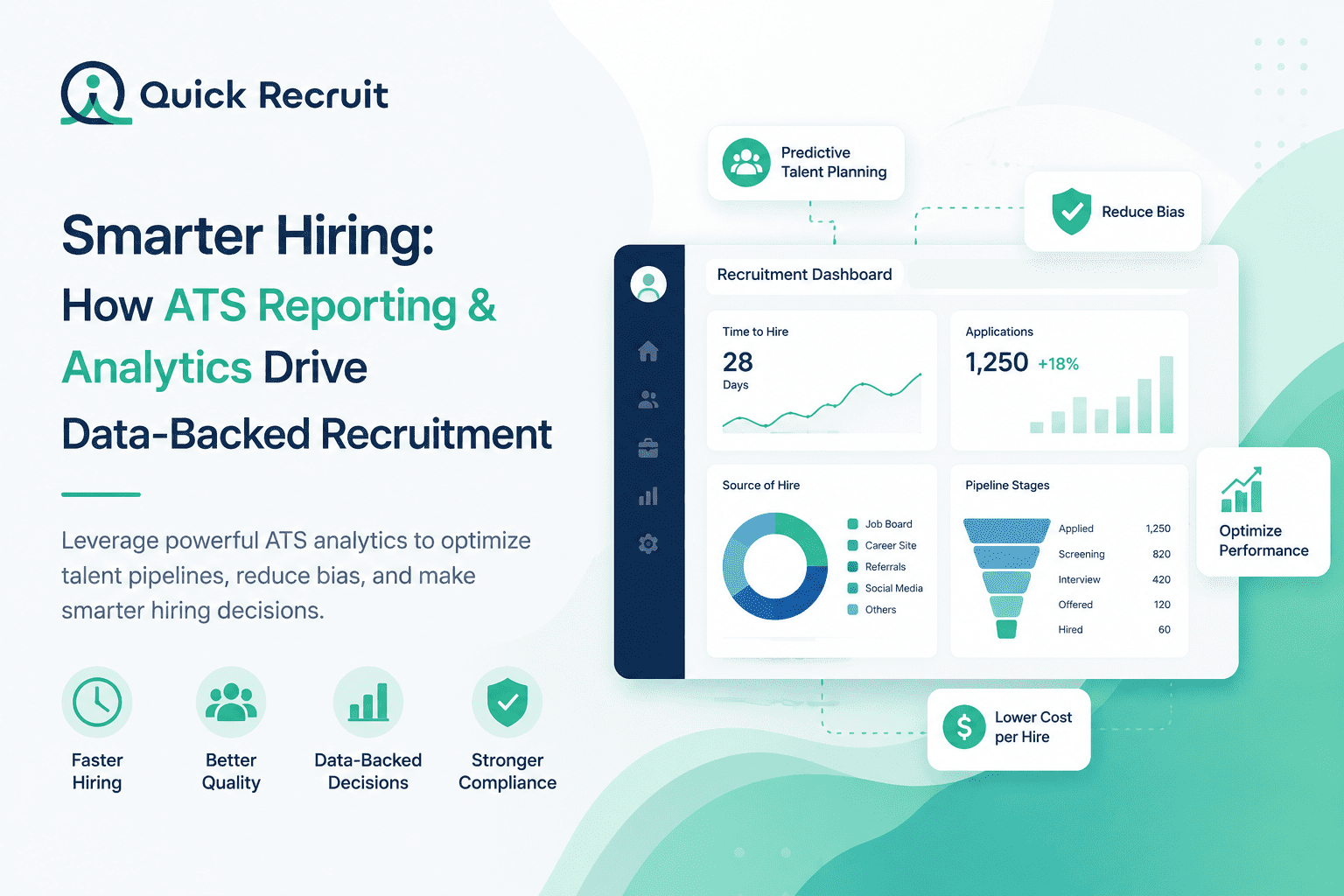
In a business landscape where data dictates strategy, gut-feeling hiring is a thing of the past. Modern talent acquisition requires precision, speed, and efficiency. This is where an Applicant Tracking System (ATS) backed by advanced recruitment analytics becomes a game-changer.
By transforming raw applicant data into actionable insights, an intelligence-driven ATS allows HR teams to optimize their talent pipelines, reduce operational friction, and make smarter hiring decisions.
The Power of Modern Recruitment Analytics
Recruitment analytics involves gathering, analyzing, and interpreting talent acquisition data to optimize your hiring funnel. Instead of simply storing resumes, an analytics-powered ATS acts as a central intelligence hub. It evaluates every touchpoint of your recruitment lifecycle—from the moment a job description goes live to the candidate’s first day on the job.
9 Ways Data-Driven ATS Analytics Revolutionize Hiring
Integrating data analytics into your daily HR workflows offers a massive competitive edge:
- Predictive Talent Planning: Analyze historical hiring cycles to forecast future workforce demands and scale your talent pipeline before a vacancy even opens.
- Mitigating Hiring Bias: Rely on objective, data-backed scoring metrics rather than subjective impressions, creating a more diverse, equitable, and inclusive workplace.
- Long-Term Retention Tracking: Identify the core traits, backgrounds, and sourcing channels of your top-performing, long-tenured employees to replicate that success with future hires.
- Air-Tight Compliance: Automatically track equal opportunity hiring data, generate audit-ready reports, and flag potential compliance risks instantly.
- Securing Top Talent Faster: In a competitive job market, data helps you identify bottleneck stages so you can move highly qualified candidates through the pipeline before your competitors do.
- Automated Workflows & Productivity: Free your HR team from tedious manual tasks. Use automated CV screening and intelligent interview scheduling to let recruiters focus on building relationships.
- Strategic Sourcing Optimization: Pinpoint exactly which job boards, social channels, or referral programs yield the highest quality candidates, maximizing your recruitment marketing budget.
- Streamlined Executive Reporting: Generate clear visual dashboards tracking key executive metrics like time-to-hire and cost-per-hire with a single click.
- Optimized Candidate Onboarding: Trace early-stage employee engagement metrics to refine your onboarding workflows, ensuring new hires acclimate quickly to your company culture.
Key Metrics: The KPIs That Matter Most
To successfully implement a data-driven recruitment policy, your team must focus on the Key Performance Indicators (KPIs) that align with your overarching business goals. HR data generally falls into three critical categories:
| Metric Category | Key Focus Areas | Best Used For… |
| Speed & Efficiency | Time-to-Hire, Time-to-Fill, Stage Conversion Rates | Identifying workflow bottlenecks and acceleration points. |
| Financial ROI | Cost-per-Hire, Recruitment Channel Spend, Agency Fees | Optimizing budget allocation and reducing overhead. |
| Quality & Impact | Offer Acceptance Rate, First-Year Retention, Quality-of-Hire | Evaluating the long-term value of your sourcing strategies. |
Pro Tip: Don’t get overwhelmed by data fatigue. If your immediate goal is budget optimization, focus strictly on cost-per-hire metrics. If you need better retention, dive deep into your hiring funnel and early-stage employee engagement scores.
Building Your Data-Driven Recruitment Loop
Transitioning to an analytics-focused hiring model is a step-by-step process:
1.Define Success KPIs:Step 1.
Align with leadership to establish clear, measurable recruitment goals (e.g., reducing time-to-hire by 15% or lowering cost-per-hire).
2.Establish the Analytics Loop:Step 2.
Configure your ATS to continuously collect clean data at every stage of the candidate journey—from application click to offer letter.
3.Monitor and Measure:Step 3.
Review your recruitment dashboards regularly to spot emerging talent trends, pipeline leaks, or underperforming sourcing channels.
4.Optimize and Iterate:Step 4.
Use your findings to adjust your job descriptions, interview stages, and sourcing budgets, ensuring continuous improvement.
Supercharge Your Recruitment with Q-Recruit
The right data is only as good as the system housing it. With Q-Recruit, you gain access to robust recruitment analytics and automated workflows designed to eliminate hiring friction.
Our intuitive platform gives you total visibility into your hiring funnel, allowing you to eliminate bottlenecks, optimize your sourcing spend, and deliver an exceptional candidate experience. Ready to unleash the power of data-driven hiring?
Book a Demo Now: https://quickrecruit.com/