
Introduction
Top 8 Recruitment Reports Every Recruiter Needs to Track in 2026 can help hiring teams make smarter decisions, improve recruitment performance, and understand what is working throughout the hiring process. In today’s competitive job market, recruiters cannot rely only on assumptions or traditional methods. They need accurate data and insights to identify challenges, improve efficiency, and build a stronger hiring strategy.
Recruitment reports provide valuable information about every stage of hiring, from sourcing candidates and measuring recruiter performance to improving candidate experience and employee retention. By tracking the right recruitment metrics, HR teams and recruiters can make better decisions and achieve successful hiring outcomes.
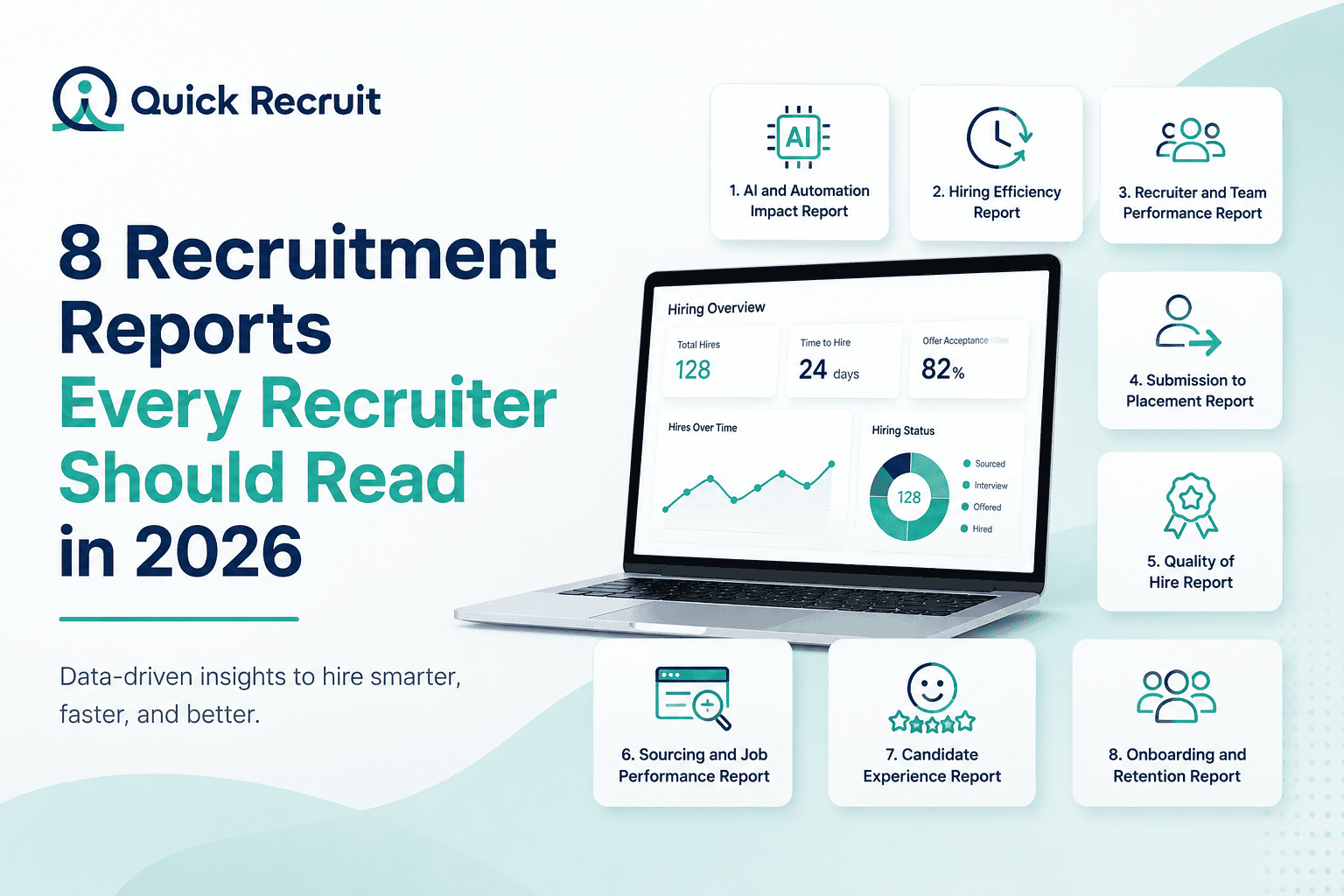
In this blog, we will explore the top 8 recruitment reports every recruiter needs to track in 2026 and understand how each report can help improve the recruitment process.
Why Recruitment Reports Matter
Many recruiters spend most of their day sourcing candidates, scheduling interviews, and communicating with hiring managers. But if they never stop to review their hiring data, they may continue repeating the same mistakes.
Recruitment reports help answer important questions like:
- Why are candidates dropping out?
- Which sourcing channel brings the best hires?
- How long does it take to fill a position?
- Which recruiter is handling jobs most efficiently?
- Are new hires staying with the company?
The answers to these questions help recruiters improve hiring decisions and create a better recruitment strategy.
1. AI and Automation Impact Report
AI has become an important part of recruitment in 2026. From resume screening to candidate matching and interview scheduling, automation saves recruiters valuable time.
An AI and Automation Impact Report shows how much of your recruitment process is being supported by automation and whether it’s actually improving hiring outcomes.
This report may include:
- Number of resumes screened automatically
- Time saved using automation
- Interview scheduling completed by AI
- Candidate matching accuracy
- Reduction in manual tasks
If automation isn’t improving efficiency, recruiters can identify where adjustments are needed instead of relying on technology without measuring its impact.
Why it matters:
When used correctly, AI allows recruiters to spend less time on repetitive tasks and more time building relationships with candidates.
2. Hiring Efficiency Report
One of the biggest challenges in recruitment is hiring quickly without compromising quality.
A Hiring Efficiency Report helps recruiters understand how smoothly the hiring process is moving.
Common metrics include:
- Time to hire
- Time to fill
- Interview turnaround time
- Offer acceptance rate
- Hiring delays
For example, if candidates are waiting several days between interview rounds, they may accept offers from competitors before your hiring process is complete.
By reviewing this report regularly, recruiters can identify bottlenecks and make faster hiring decisions.
Why it matters:
A faster hiring process often leads to a better candidate experience and reduces the risk of losing top talent.
3. Recruiter and Team Performance Report
Every recruiter has different strengths. Some excel at sourcing candidates, while others are great at closing offers.
A Recruiter and Team Performance Report measures how individual recruiters and the hiring team are performing.
Typical metrics include:
- Number of positions filled
- Average hiring time
- Candidate response rate
- Interviews scheduled
- Offer acceptance percentage
This report is not about comparing employees unfairly. Instead, it helps managers understand where additional training, support, or workload balancing may be needed.
Why it matters:
High-performing teams are built by understanding performance, sharing best practices, and continuously improving.
4. Submission to Placement Report
For staffing agencies and recruitment firms, this report is especially valuable.
It measures how many candidate submissions actually become successful placements.
The report typically tracks:
- Candidates submitted
- Interviews completed
- Offers received
- Placements made
- Submission-to-placement ratio
If many candidates are being submitted but very few are getting hired, recruiters may need to improve candidate screening or better understand client requirements.
Why it matters:
A higher placement rate means recruiters are presenting better-qualified candidates and improving client satisfaction.
5. Quality of Hire Report
Hiring quickly is important, but hiring the right person matters even more.
A Quality of Hire Report measures whether new employees perform well after joining the organization.
This report may include:
- Employee performance reviews
- Manager satisfaction
- Productivity levels
- Training completion
- Early turnover
For example, if employees consistently leave within the first three months, the recruitment process may need improvement.
Recruiters should focus on hiring candidates who are not only qualified but also a good fit for the company’s culture and long-term goals.
Why it matters:
Quality hires contribute more, stay longer, and reduce future hiring costs.
6. Sourcing and Job Performance Report
Not every hiring channel delivers the same results.
Some candidates come through job boards, others through referrals, career pages, social media, or recruitment agencies.
A Sourcing and Job Performance Report shows which channels produce the best candidates.
It usually includes:
- Applications by source
- Qualified candidates
- Interview conversion
- Hiring conversion
- Cost per source
- Job posting performance
For example, if employee referrals consistently produce high-quality candidates, recruiters may decide to invest more in referral programs.
Similarly, if one job board generates thousands of applications but very few qualified candidates, it may not be the best investment.
Why it matters:
Recruiters can spend their hiring budget more effectively by focusing on the channels that deliver the best results.
7. Candidate Experience Report
The hiring process doesn’t only affect recruiters—it also shapes how candidates feel about your company.
A Candidate Experience Report helps measure how applicants experience the recruitment journey.
It may track:
- Candidate satisfaction surveys
- Application completion rate
- Interview feedback
- Communication response time
- Candidate drop-off rate
Candidates appreciate timely communication, clear interview instructions, and quick updates.
Even candidates who aren’t selected should leave with a positive impression of your organization.
A good candidate experience strengthens employer branding and encourages future applications.
Why it matters:
Happy candidates are more likely to recommend your company and apply again in the future.
8. Onboarding and Retention Report
Recruitment doesn’t end when a candidate accepts an offer.
The first few months after joining are just as important.
An Onboarding and Retention Report helps recruiters understand whether new employees are settling into their roles successfully.
Common metrics include:
- New hire retention
- First 30-, 60-, and 90-day progress
- Onboarding completion
- Employee engagement
- Early resignations
If many employees leave shortly after joining, recruiters and HR teams should investigate whether the issue lies in hiring expectations, onboarding, or workplace culture.
Why it matters:
Strong onboarding improves employee confidence, productivity, and long-term retention.
How Often Should Recruiters Review These Reports?
Reviewing reports only once a year isn’t enough.
A better approach is to follow a regular schedule:
- Weekly: Hiring efficiency and recruiter performance
- Monthly: Sourcing performance, candidate experience, and AI impact
- Quarterly: Quality of hire and submission-to-placement
- Biannually or Annually: Onboarding and retention trends
Regular reviews help recruiters identify problems early instead of waiting until hiring goals are missed.
Best Practices for Using Recruitment Reports
To get the most value from recruitment reports:
- Focus on a few important metrics instead of tracking everything.
- Compare reports over time to identify trends.
- Share insights with hiring managers.
- Use reports to improve hiring decisions, not just create dashboards.
- Combine recruitment data with recruiter experience and business goals.
The purpose of reporting is not to collect data—it is to make better hiring decisions.
Conclusion
Recruitment in 2026 is driven by both people and data. While recruiter experience, communication, and relationship-building remain essential, recruitment reports provide the insights needed to make confident hiring decisions.
By regularly tracking these top 8 recruitment reports every recruiter needs to track in 2026, organizations can identify hiring challenges, improve recruitment efficiency, enhance candidate experience, and make better talent decisions.
The best recruiters don’t rely on guesswork. They use data to understand what’s working, fix what’s not, and continuously improve every stage of the hiring journey.
Whether you’re hiring for a small business or managing recruitment for a large organization, these reports can help you make smarter decisions and achieve better hiring outcomes.
What are recruitment reports?
Recruitment reports are data-driven summaries that help recruiters track hiring performance, identify bottlenecks, and improve recruitment strategies.
Which recruitment report is most important?
There isn’t a single most important report. Hiring Efficiency, Quality of Hire, and Candidate Experience reports are among the most valuable because they directly impact hiring success.
How often should recruiters review recruitment reports?
Most hiring teams should review operational reports weekly or monthly, while strategic reports such as Quality of Hire and Retention can be reviewed quarterly.
Can recruitment software generate these reports automatically?
Yes. Most modern recruitment platforms include reporting dashboards that help recruiters monitor hiring metrics, sourcing performance, recruiter productivity, and candidate experience in real time.