
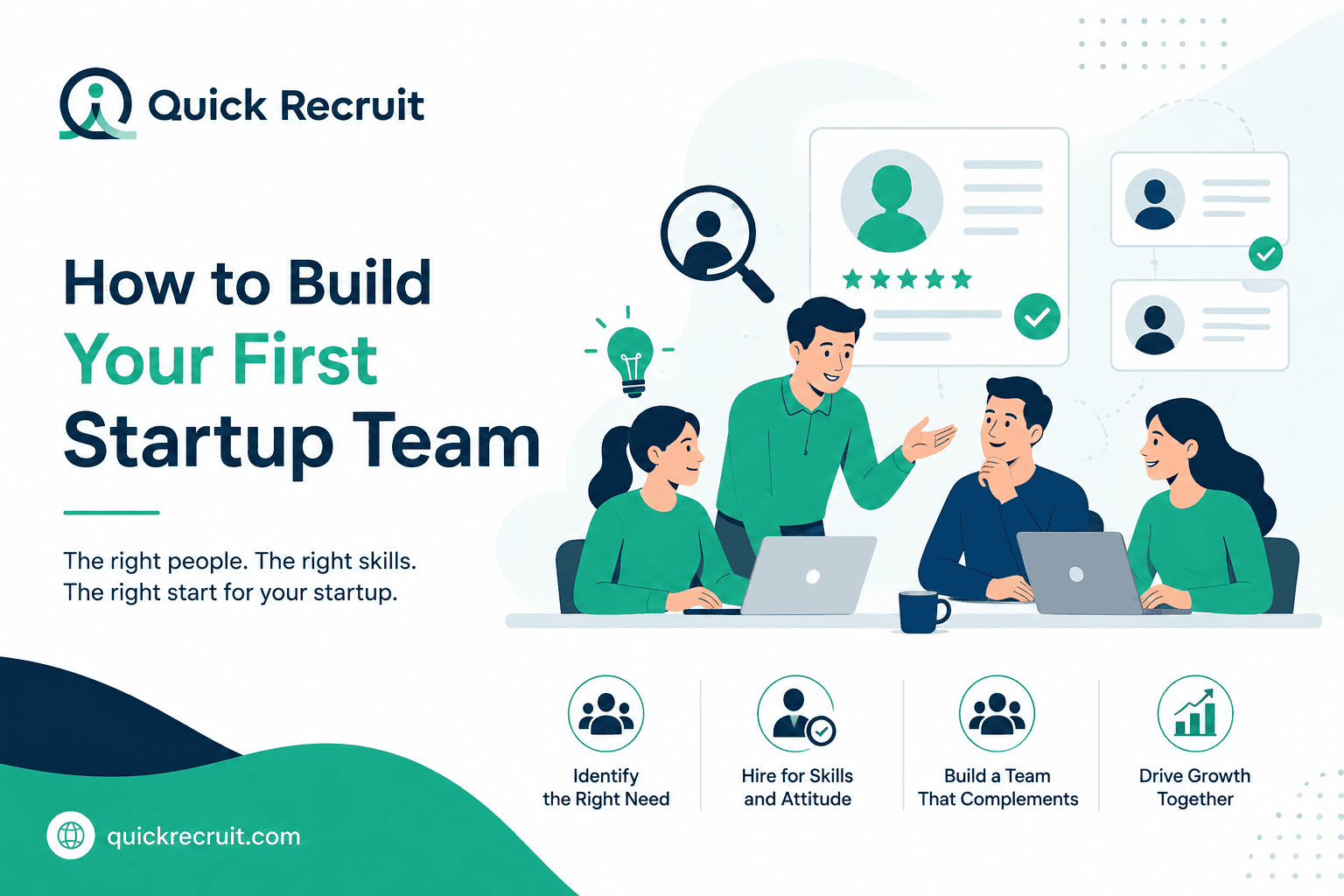
How to build your first startup team is one of the most important questions founders face when a business starts growing. At the beginning, you may be able to handle product development, sales, marketing, customer support and daily operations on your own. But as the workload increases, trying to manage everything yourself can slow the company down.
Building a startup team is not simply about hiring more people. It is about finding the right people with the skills, experience and attitude needed to help your company move forward. Your first few employees can have a major impact on your startup’s culture, productivity and future growth.
In this guide, we’ll look at how to build your first startup team, when you should start hiring, who you should hire first, how to find suitable candidates and the common hiring mistakes founders should avoid.
Table of Contents
How to Build Your First Startup Team: When Should You Start Hiring?
Hiring too early can put unnecessary pressure on your startup budget, while hiring too late can slow down your growth. The right time to hire is usually when you have a clear business need that you cannot efficiently handle yourself.
Before hiring, look at where you are spending most of your time and where the company is losing opportunities.
Ask yourself:
- What work is taking up most of my time?
- Which tasks require skills I don’t have?
- Is the workload consistent?
- Can the work be automated or outsourced?
- Will hiring someone directly improve business growth?
- Can the company comfortably afford the position?
A good first hire should solve a real problem rather than simply make the team look bigger.
Identify the Skills Your Startup Is Missing
Before creating a job description, understand what your current team can and cannot do. Founders often make the mistake of hiring people with skills similar to their own instead of filling important gaps.
For example, if you are strong in product development but struggle with sales, a sales-focused person may bring more value than another product specialist.
Look at areas such as:
- Product development
- Sales
- Marketing
- Customer support
- Finance
- Operations
- Technology
- Business development
The goal is to create a team where each person brings something valuable to the business.
Who Should You Hire First?
When you’re learning how to build your first startup team, one of the biggest decisions is deciding who to hire first. There is no single hiring formula that works for every startup. Your first hire should depend on your business model, current stage and biggest challenge.
For a technology startup, a developer or product specialist may be essential. A startup that already has a strong product but struggles to attract customers may need someone focused on sales or marketing.
Some common early startup roles include:
- Technical or product specialist – Builds and improves the product.
- Sales professional – Finds potential customers and generates revenue.
- Marketing specialist – Builds awareness and attracts the right audience.
- Customer success employee – Helps customers get value from the product.
- Operations specialist – Organizes processes and handles day-to-day business activities.
Don’t hire based only on what successful startups have done. Hire based on what your startup needs right now.
Look for More Than Experience
Experience is important, but it should not be the only factor in your hiring decision. Someone may have an impressive résumé but struggle in a small company where priorities change frequently.
Early-stage startups usually benefit from people who are comfortable taking ownership and working without constant supervision.
Look for qualities such as:
- Strong problem-solving ability
- Adaptability
- Good communication
- Ownership and accountability
- Willingness to learn
- Ability to work independently
- Genuine interest in the company’s mission
A candidate who is willing to learn and solve problems can sometimes be more valuable than someone with a longer résumé but little flexibility.
Generalists Can Be Valuable in Early Startups
When your team is small, you may not need someone who performs only one narrow task. A generalist who can handle different responsibilities can be extremely useful during the early stages.
For example, your first marketing employee might work on content, email campaigns, website improvements and customer research. As the company grows, these responsibilities can eventually be divided among specialists.
A good early-stage generalist should still have a strong core skill. The difference is that they are comfortable stepping outside their main area when the business needs it.
Write a Clear Job Description
A good job description helps you attract the right candidates and prevents misunderstandings after someone joins.
Instead of using generic phrases such as “dynamic team player” or “passionate professional,” explain what the person will actually do.
Your job description should include:
- A short introduction to your company
- The purpose of the role
- Main responsibilities
- Required skills
- Nice-to-have skills
- Expected outcomes
- Working arrangements
- Compensation information where appropriate
- Hiring process
Candidates should be able to read the description and understand what their typical responsibilities will look like.
Where Can You Find Your First Employees?
Knowing how to build your first startup team also means knowing where to find the right people. Your personal and professional network can be one of the best places to start.
Referrals can also save time because the person recommending the candidate already has some knowledge of their abilities.
You can also use:
- Professional networking platforms
- Startup communities
- Industry groups
- Job boards
- University and professional networks
- Employee referrals
- Direct outreach
For your first few hires, personal recommendations can be particularly valuable because you are making important decisions with limited information.
Create a Simple Hiring Process
A clear hiring process makes how to build your first startup team much easier to manage. Your startup does not need a complicated corporate recruitment process, but you should have a consistent way of evaluating candidates.
A simple process can include:
- Review applications and referrals.
- Conduct an initial conversation.
- Evaluate relevant skills.
- Discuss previous experience.
- Give a practical task when appropriate.
- Check references.
- Have a final discussion.
- Make the offer.
Each stage should help you answer a specific question about the candidate.
Ask Questions That Reveal How Candidates Think
Instead of asking only questions about a candidate’s résumé, ask about real situations they have experienced.
Useful questions include:
- Tell me about a difficult problem you solved.
- Describe a project where you had little direction.
- Tell me about a mistake you made and what you learned.
- How do you prioritize when several things are urgent?
- Tell me about a disagreement with a colleague.
- What is something new you had to learn quickly?
- What would you do during your first 30 days in this role?
These questions can give you a better understanding of how someone approaches work.
Don’t Hire Only for Culture Fit
Culture matters, but “culture fit” should not mean hiring people who are similar to you.
A strong startup team should be able to disagree respectfully and challenge ideas when necessary.
Instead of asking whether you personally like someone, consider whether they demonstrate the behaviors your company values.
For example:
- They communicate openly.
- They take responsibility for mistakes.
- They respect customers.
- They are willing to learn.
- They give constructive feedback.
- They can disagree professionally.
This creates a healthier team culture while still keeping everyone aligned.
Check References Before Making the Final Decision
Reference checks can help confirm whether what you learned during the interview matches the candidate’s previous performance.
Rather than asking whether the person was “good,” ask specific questions.
You can ask:
- What responsibilities did they handle?
- What were their strongest skills?
- Where did they need improvement?
- How independently did they work?
- How did they handle difficult situations?
- Would you hire them again?
Reference checks should support your decision rather than replace the interview process.
Make the Offer Clear and Honest
Hiring for a startup is different from hiring for an established company. Candidates may be taking a greater level of risk by joining you, so be transparent about the company’s current situation.
Explain:
- Their responsibilities
- Salary
- Benefits
- Equity, if applicable
- Working arrangements
- Reporting structure
- Expected working hours
- Company’s current stage
- Short-term expectations
- Growth opportunities
Avoid making promises about future promotions, salaries or equity that have not been formally agreed upon.
Think Carefully About Salary and Equity
Startup compensation can include salary, bonuses, benefits and sometimes equity. The right combination depends on your company’s stage, budget, location and the candidate’s experience.
If you offer equity, make sure the employee understands the basic terms and that the arrangement is properly documented. Equity, taxation and vesting rules can vary depending on the company’s structure and location, so professional legal and financial advice is worthwhile.
Employee or Contractor?
Not every person who works with a startup needs to be a full-time employee. Depending on the work, you may consider freelancers, contractors or part-time specialists.
However, founders should not simply label someone a contractor without checking the applicable employment rules. Worker classification can depend on the actual working relationship, not just the wording of an agreement.
Consider:
- How much control you have over the person’s work
- Whether they work independently
- How they are paid
- Whether they work for other clients
- The nature and duration of the relationship
- The employment laws applicable to your location
When you are unsure, consult an employment or tax professional.
Prepare Before Your New Employee Starts
Hiring someone is only the beginning. A poor onboarding experience can make even a great employee struggle.
Before their first day, prepare the tools, accounts, documents and information they will need.
Your onboarding should cover:
- Company mission
- Product or service
- Customers
- Team structure
- Current goals
- Job responsibilities
- Communication tools
- Important processes
- First project
Give the employee something meaningful to work on early rather than keeping them in meetings for weeks.
Give Employees Ownership
One of the biggest advantages of a small startup is speed. Employees should know what they own and what decisions they can make without asking the founder about everything.
For each major responsibility, clearly define:
- What they are responsible for
- What decisions they can make
- What results are expected
- How success will be measured
- When they should involve the founder
Clear ownership reduces confusion and allows the founder to focus on higher-level priorities.
Avoid These Common Startup Hiring Mistakes
Hiring mistakes can be expensive for a young company. Some of the most common problems include:
- Hiring simply because you feel overwhelmed
- Hiring too early
- Choosing candidates based only on their résumé
- Ignoring communication problems
- Hiring friends without evaluating them properly
- Creating vague job descriptions
- Skipping reference checks
- Hiring too many specialists too early
- Making promises that are not documented
- Failing to define responsibilities
- Poor onboarding
- Hiring people who need constant supervision
Taking more time to define the role can save you considerable time later.
Build a Small Team With Complementary Skills
Your first startup team does not need to be large. In fact, a small group of capable people can often move faster than a large team with unclear responsibilities.
Think about what each person brings to the company.
For example:
Founder: Vision, product knowledge and strategy
Technical hire: Product development and technology
Sales hire: Customer acquisition and revenue
Marketing hire: Brand, content and demand generation
The exact combination will depend on your business, but the principle remains the same: hire people who strengthen the team rather than simply increasing headcount.
Final Thoughts
Building your first startup team is not about finding the largest number of talented people. It is about finding the right people for the problems your company is facing today.
Start by identifying your biggest bottleneck. Define the work clearly, decide what skills are missing and look for people who can take ownership of those responsibilities.
Your first employees will influence more than your workload. They can shape your company culture, customer experience and future hiring decisions.
Take the time to hire carefully, communicate expectations clearly and give good employees enough freedom to do their work.
A small team with the right skills, attitude and shared purpose can take a startup much further than a large team built without a clear plan.