

Recruiting in 2026 isn’t about posting jobs — it’s about automating everything before the interview even starts. In this article, we’ve shortlisted some of the top recruitment automation tools for 2026 that simplify workflows, reduce hiring time, and improve decision quality — whether you’re a startup, agency, or enterprise.
Why Recruitment Automation Became Non-Negotiable in 2026
You know something’s serious when it stops being optional. That’s exactly what happened with recruitment automation after 2025.
The global hiring boom that followed the economic rebound overwhelmed traditional recruiting teams. Companies were hiring faster, but resumes piled up even faster. It wasn’t about finding talent — it was about finding time.
Here’s what changed in a big way:
- Volume exploded: One job post could receive 1,000+ applicants within hours.
- Candidate expectations evolved: Instant communication, remote interviews, and clear feedback are now the norm.
- Bias became unacceptable: Automation offers a cleaner, data-driven lens to evaluate candidates fairly.
Gartner projected that by 2026, more than 70% of enterprise recruiting teams would automate at least one stage of hiring with AI. Meanwhile, SHRM called automation a “critical competitive edge” rather than a luxury.
And yet, many recruiters face “tool fatigue.” One app for sourcing, another for screening, another for scheduling… it’s too much. The future? Integrated platforms — where sourcing, screening, scoring, and scheduling live inside one AI brain.
“Recruitment automation is shifting from time-saving to decision-making.” — Quick Recruit Product Team
What Makes a Great Recruitment Automation Tool?
Before we drop the list, let’s align on what separates the great tools from the forgettable ones. Because anyone can claim “AI-driven hiring” — but only a few actually deliver.
Core Capabilities to Look For
When evaluating recruitment automation tools, prioritize platforms that offer :
- AI-Driven Candidate Matching: Goes beyond keyword matching and learns patterns over time.
- Automated Resume Parsing: Extracts and organizes data instantly, eliminating manual entry.
- Interview Scheduling: Syncs calendars, suggests times, and even conducts basic video interviews automatically.
- Collaborative Hiring Dashboards: Let recruiters, hiring managers, and interviewers collaborate without silos.
- Analytics & Reporting: Understand what’s working, what’s not, and how to optimize each funnel step.
Key Evaluation Factors
Choosing the right tool depends on more than features. Consider:
- Ease of Integration: Will it work with your current ATS, CRM, Slack, or Zoom?
- Pricing Flexibility: Is there a pay-as-you-go model or only expensive enterprise tiers?
- Scalability: Can it grow with you from 10 hires a year to 100+?
- Support & Onboarding: Will they walk your team through the transition?
- Compliance & Data Security: Especially important in regulated regions (e.g., GDPR, India’s DPDP Bill).
Tool | Best For | Key Feature | AI Power | Pricing | Free Trial |
Quick Recruit | Full-stack automation | End-to-end AI hiring -sourcing, screening & interviews |
| 12$ |
|
HireVue | Video interviews | AI video analysis | Low | custom |
|
Greenhouse | Workflow automation | Advanced integrations | Medium | custom |
|
Breezy HR | Startups | Interview scheduling | Low | 83$ |
|
Manatal | Small agencies | AI scoring + sourcing | High | $15$ |
|
Zoho Recruit | Pricing transparency | Zoho ecosystem integrations | Medium | 20$ |
|
Top Recruitment Automation Tools (2026 Edition)
Let’s dive into the standout recruitment automation tools shaping the hiring landscape in 2026.
1. Quick Recruit – End-to-End AI Hiring Platform with CRM
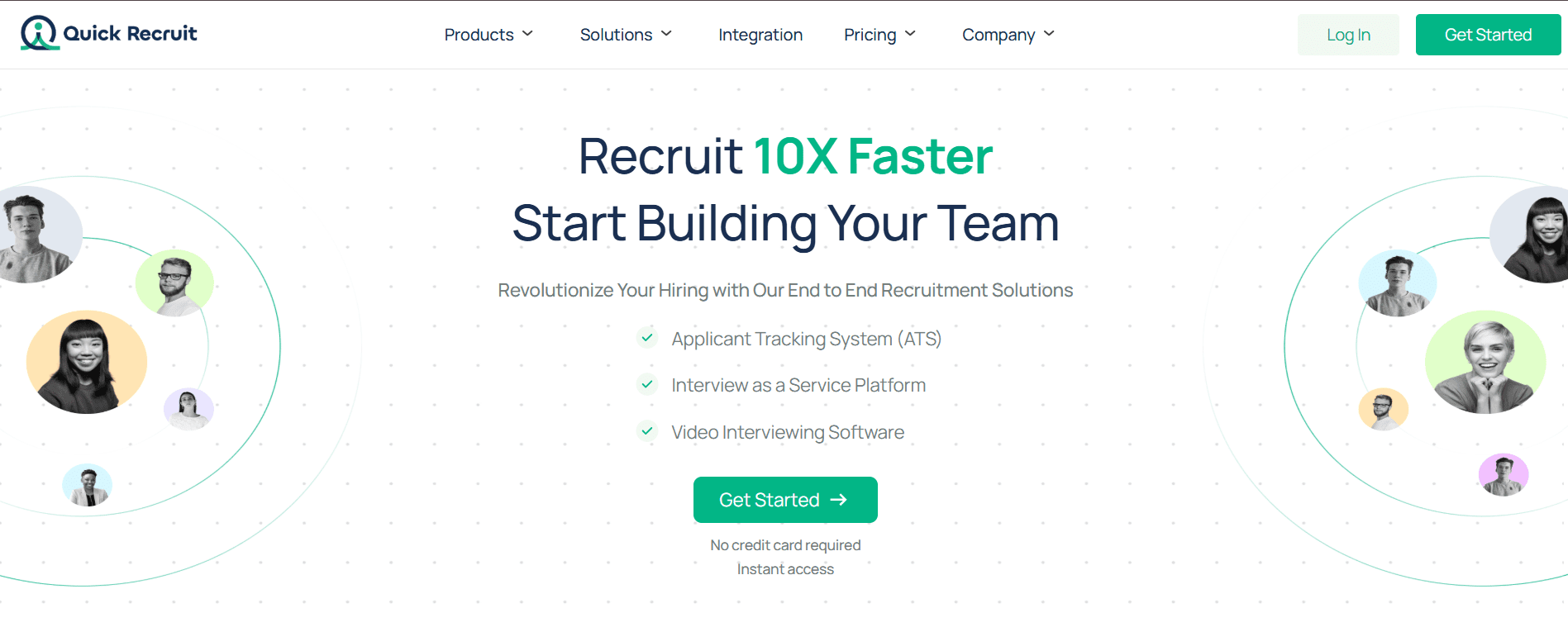
Best for:Teams who need a single platform to source, screen, and hire top talent seamlessly.
Quick Recruit is the Swiss Army knife of recruitment automation in 2026 — it covers everything from sourcing to final selection. What sets it apart? It combines a full-stack AI-powered recruitment suite with a built-in CRM, meaning your sourcing, screening, and engagement are all connected in one ecosystem.
Key Features:
- Q-Screen:Automated AI video interviews that screen candidates instantly and rank them based on relevance, tone, and communication.
- Q-Expert: A hybrid Interview-as-a-Service, where expert interviewers handle your top candidates and deliver instant insights supported by post-interview analytics.
- Q-Recruit- powers intelligent sourcing, resume parsing, automated candidate pipelining, and role-based AI matching. It builds smart funnels, keeps talent warm, and helps recruiters focus only on top-fit candidates.
Standout Factor: Unlike most tools that only do one thing well, Quick Recruit delivers interview automation, AI scoring, and CRM-style candidate tracking in one clean dashboard.
Pricing:
- Forever-Free Plan: $0/month — Get started instantly with AI resume parsing, candidate tracking, and 1 active job board. (No credit card required.)
- Starter: ~$12/month — For fast-growing startups ready to automate the first 50 hires.
- Professional: ~$22/month — Unlocks 25+ job boards, advanced analytics, and deeper AI insights.
- Enterprise: Custom pricing — Built for teams hiring at scale with full customization and dedicated support.
- Q-Screen: From ~$18 per AI screening — pay only when you screen.
- Q-Expert: From ~$120 per expert interview — pay only when you interview.
Why Recruiters Choose Quick Recruit
- Most platforms make AI an add-on — Quick Recruit makes it the core.
With a Forever-Free plan, transparent pay-as-you-go options, and a unified suite for sourcing, screening, and interviewing, it’s not just pricing — it’s the future of hiring made accessible.
Free Demo: 
 Explore Quick Recruit’s Power Trio →
2. HireVue
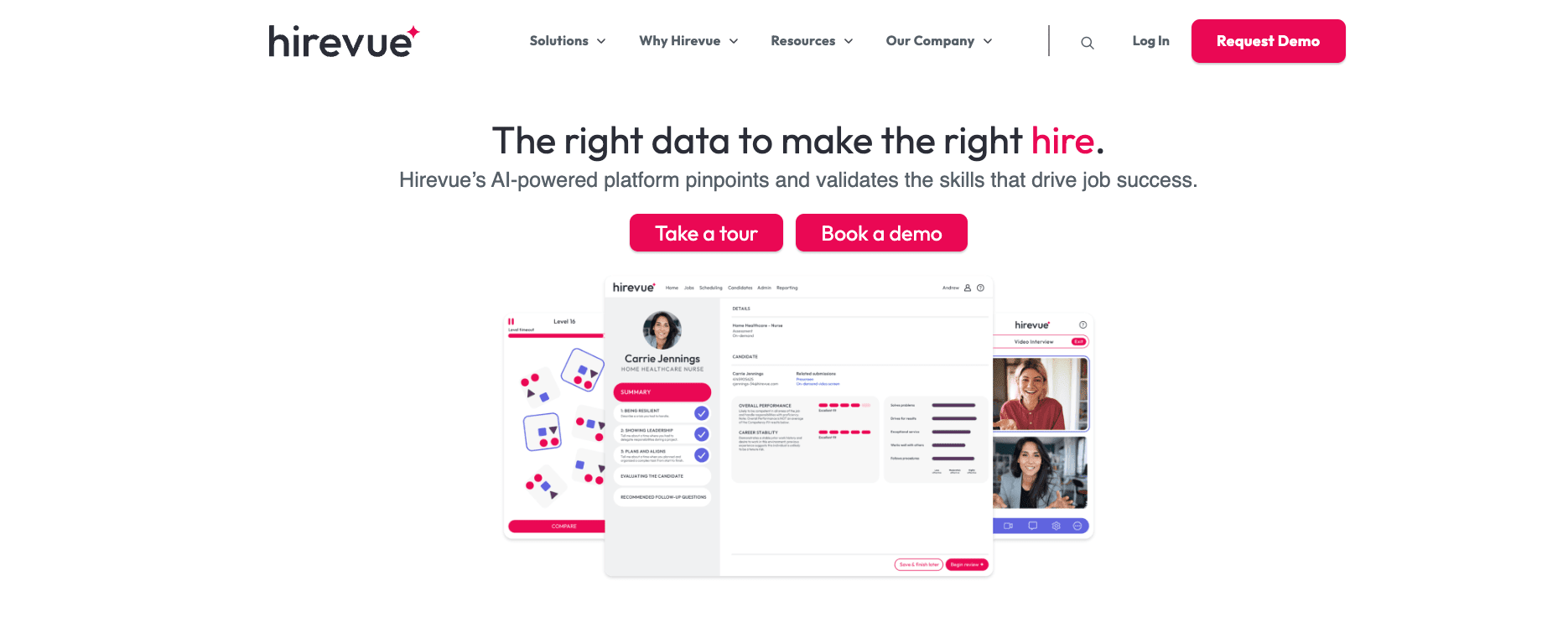
Best for: Large enterprises automating video interviews and candidate assessments.
HireVue pioneered AI-powered video interviewing, and in 2026, it’s still a go-to for enterprise-scale organizations. It analyzes candidate responses — tone, language, eye contact — using AI to generate predictive hiring scores.
Strengths:
- Deep AI analytics for interviews.
- Integrates well with top ATS platforms.
- Great for high-volume, structured hiring.
Limitations:
- Expensive for small or mid-sized teams.
- Limited customization for regional/local hiring workflows.
Pricing: Enterprise-only, custom contracts
Free Trial: 
3. Greenhouse
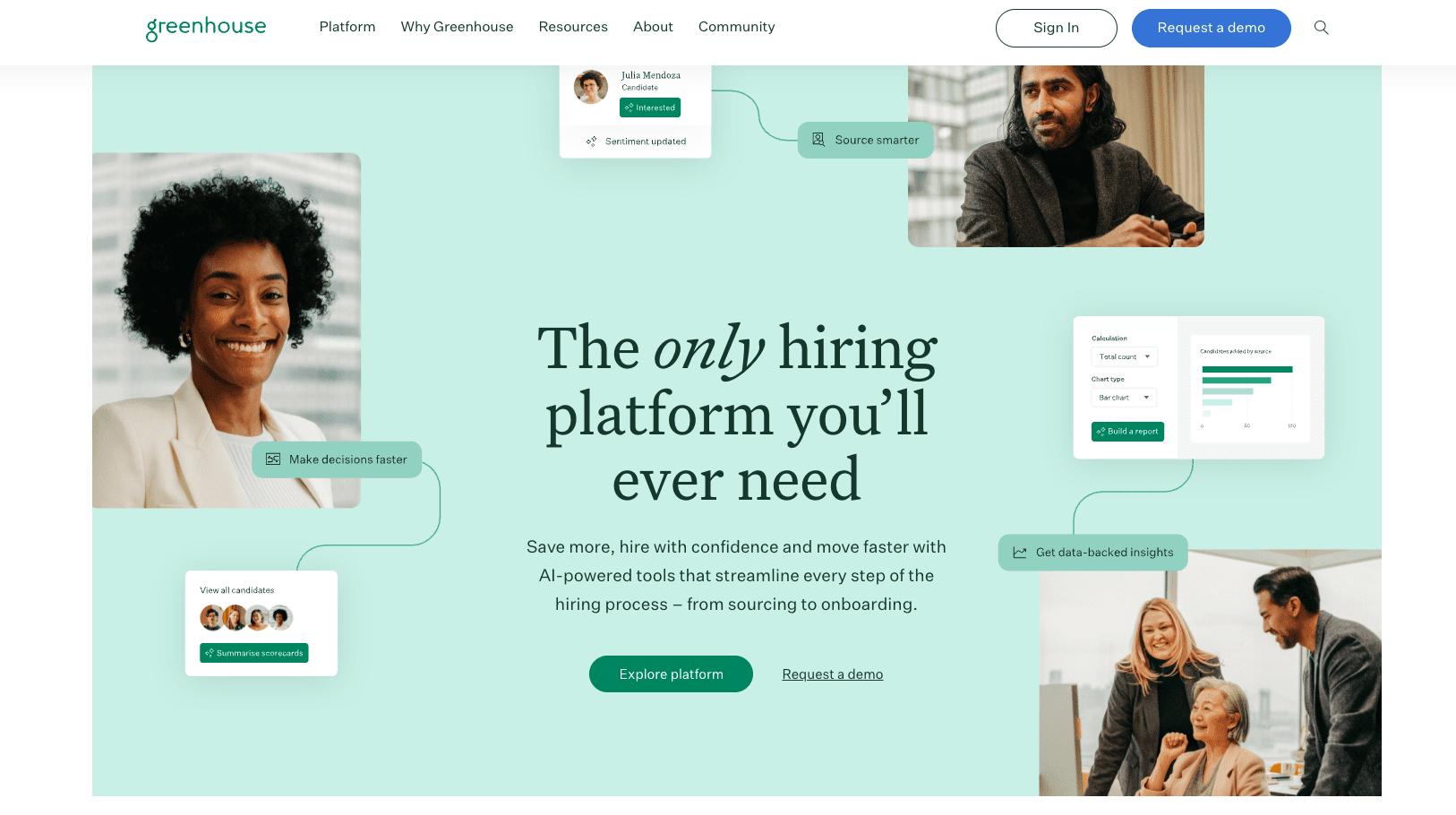
Best for: Enterprises focused on structured, collaborative hiring.
Greenhouse is one of the most trusted names in the hiring world, and it continues to be a leader in workflow automation and recruiting analytics. It’s especially powerful if you’re running complex hiring pipelines with multiple stakeholders.
Key Features:
- Highly customizable pipelines.
- Deep integration library (Slack, Google Meet, Zoom, etc.).
- Collaboration features that keep hiring teams aligned.
Drawback: Its premium pricing makes it less ideal for early-stage startups.
Pricing: custom
Free Trial:
4. Lever
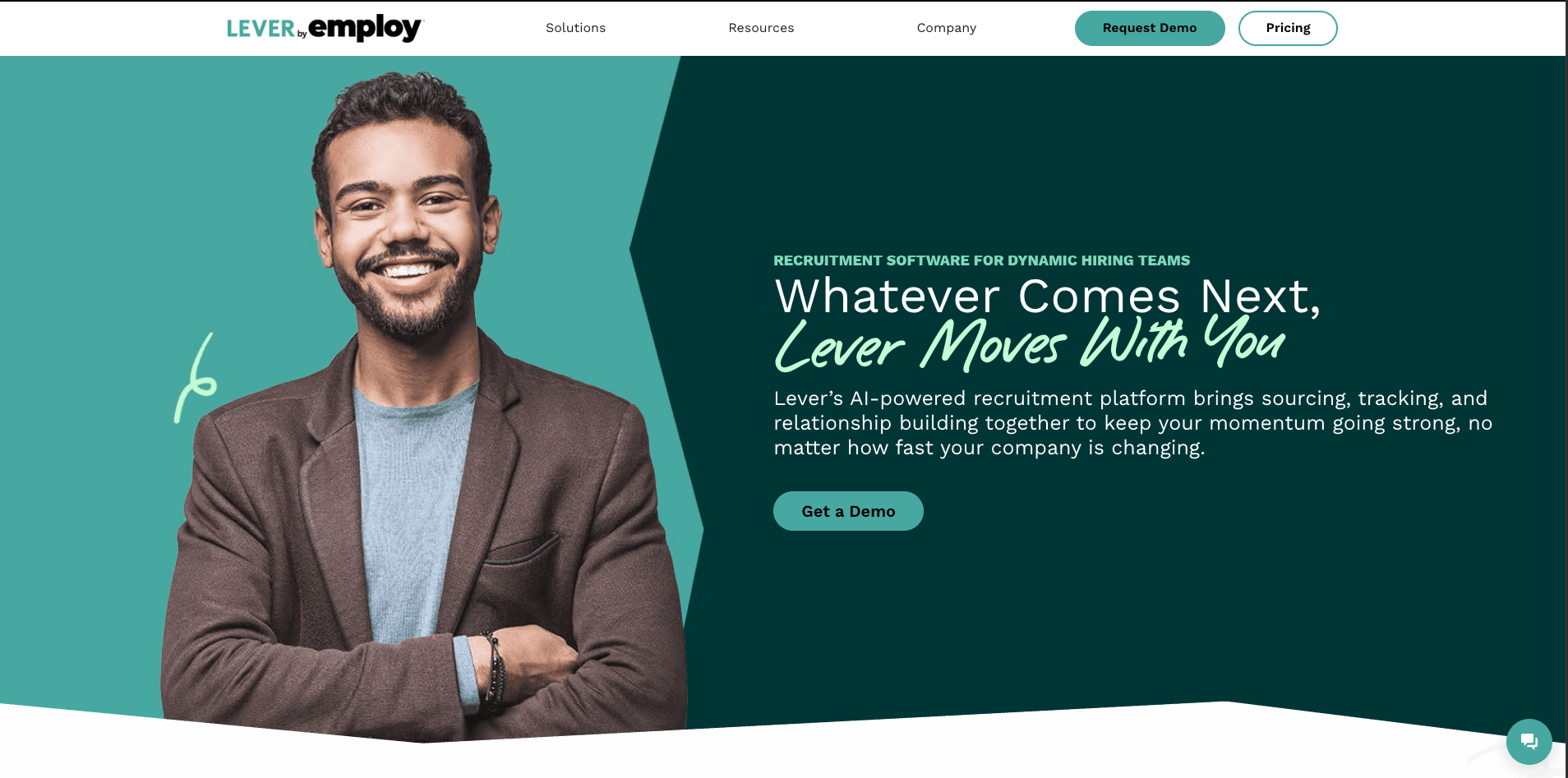
Best for: Recruitment marketing and candidate nurturing.
Lever combines CRM functionality with ATS features, making it a smart choice if you need to build talent pipelines, not just fill roles. Its automation features are geared toward long-term engagement.
Key Features:
- Candidate rediscovery (re-surface past applicants).
- Personalized email workflows.
- Visual pipeline dashboards.
Pricing: – Custom tiers (typically $17K–$31K/year for ~150–230 employees, based on Vendr data)
Free Trial: Limited
5. SmartRecruiters
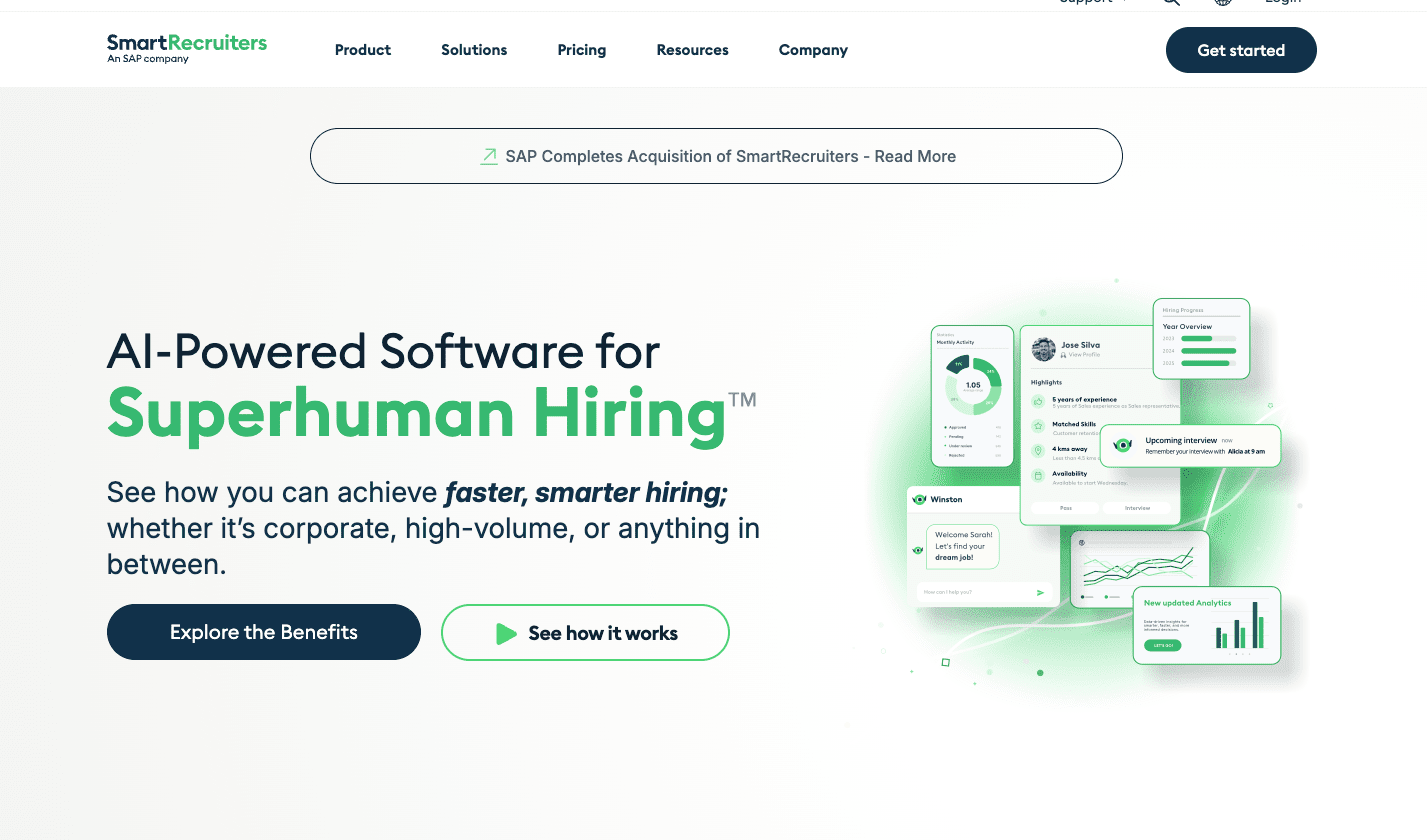
Best for: Teams looking for a full-suite solution with sourcing, interviewing, and offer management.
This is one of the few platforms that covers the entire recruitment lifecycle. With strong sourcing tools and built-in interview scheduling, SmartRecruiters is ideal for teams that want to streamline everything.
Features:
- AI screening capabilities.
- Integrated job advertising.
- Collaborative scorecards.
Pricing: custom
Free Trial:
6. Breezy HR
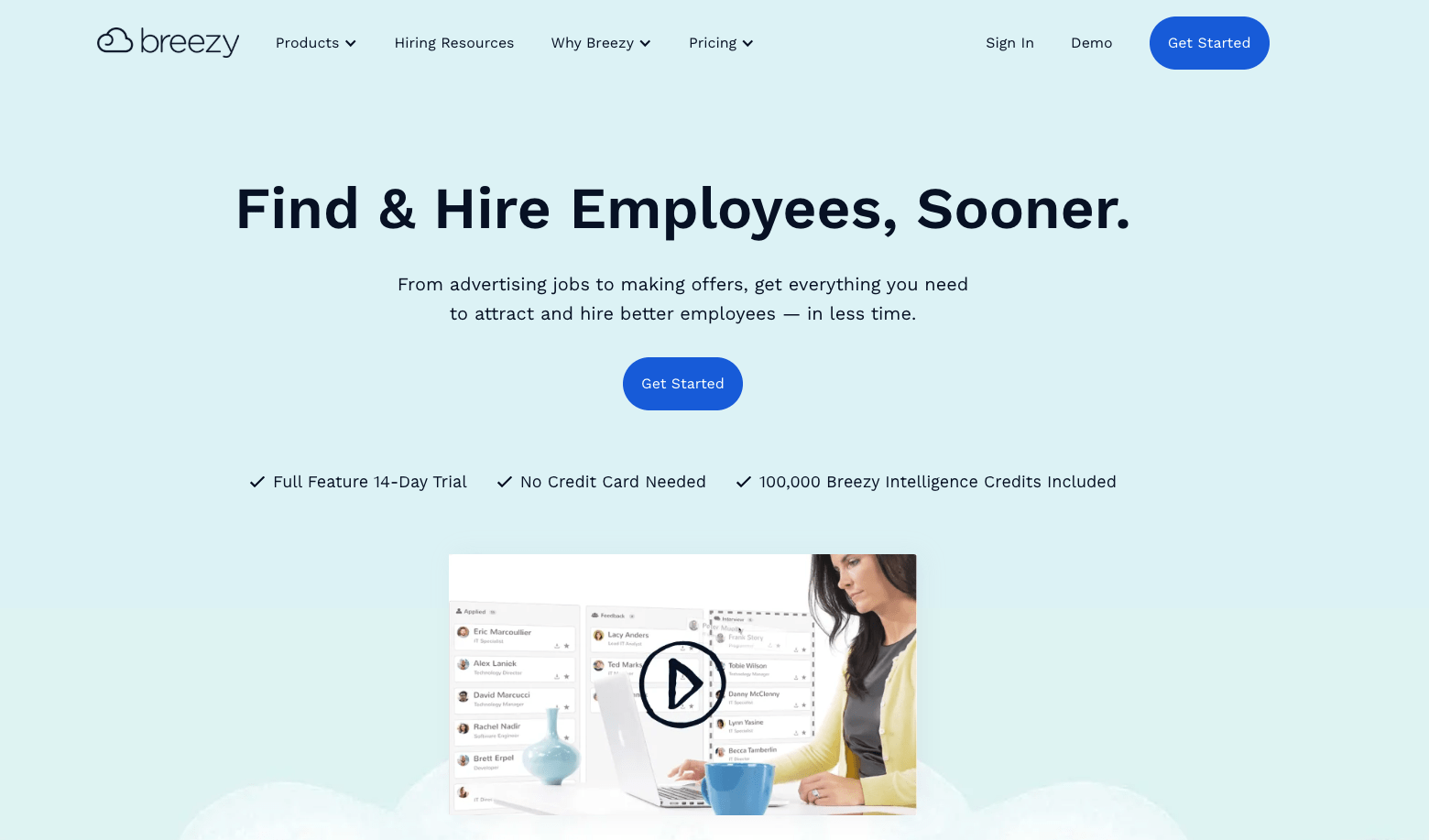
Best for: Startups and small teams looking for a simple, visual interface.
Breezy HR is built for those who want power without complexity. It automates the basics — scheduling, emailing, pipeline stages — with a beautiful, drag-and-drop UI.
Why it works:
- Easy to set up in hours, not days.
- Affordable even for lean teams.
- Strong mobile experience.
AI Power Lower compared to platforms like Quick Recruit, but enough for SMBs.
Pricing: $Bootstrap (1–9 employees): Free forever
Startup (10–49 employees): $83/mo
Growth (50–99 employees): $129/mo
Business (99+ employees): $249/mo
Free Trial: (14-day Free Trial)
7. Manatal
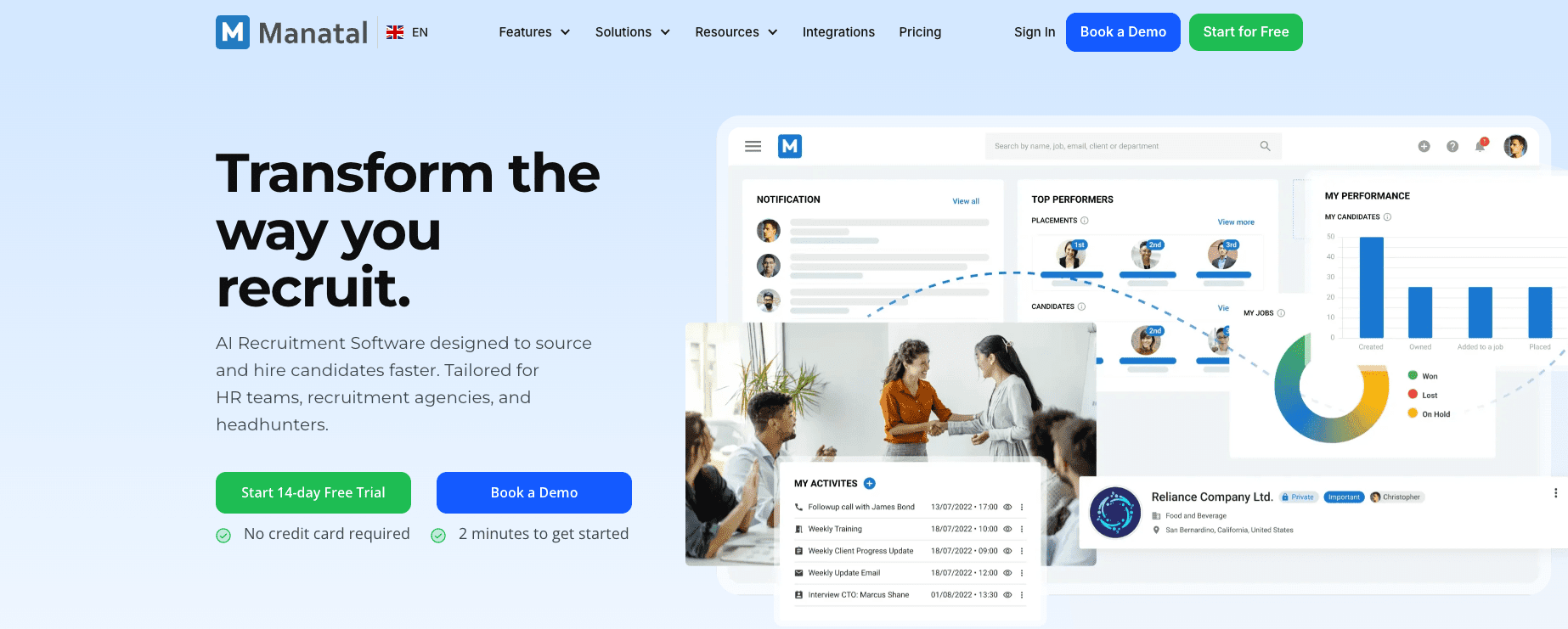
Best for: Affordable AI scoring, especially for small agencies and global teams.
Manatal offers solid automation at an unbeatable price. It helps recruiters source candidates from LinkedIn and job boards, then uses AI to score and rank them.
Highlights:
- Resume enrichment from social data.
- Strong LinkedIn and Glassdoor integration.
- Good compliance support for GDPR and more.
Pricing: Plans start around $15 per user/month, but core features scale up quickly with higher tiers
Free Trial:
8. Zoho Recruit
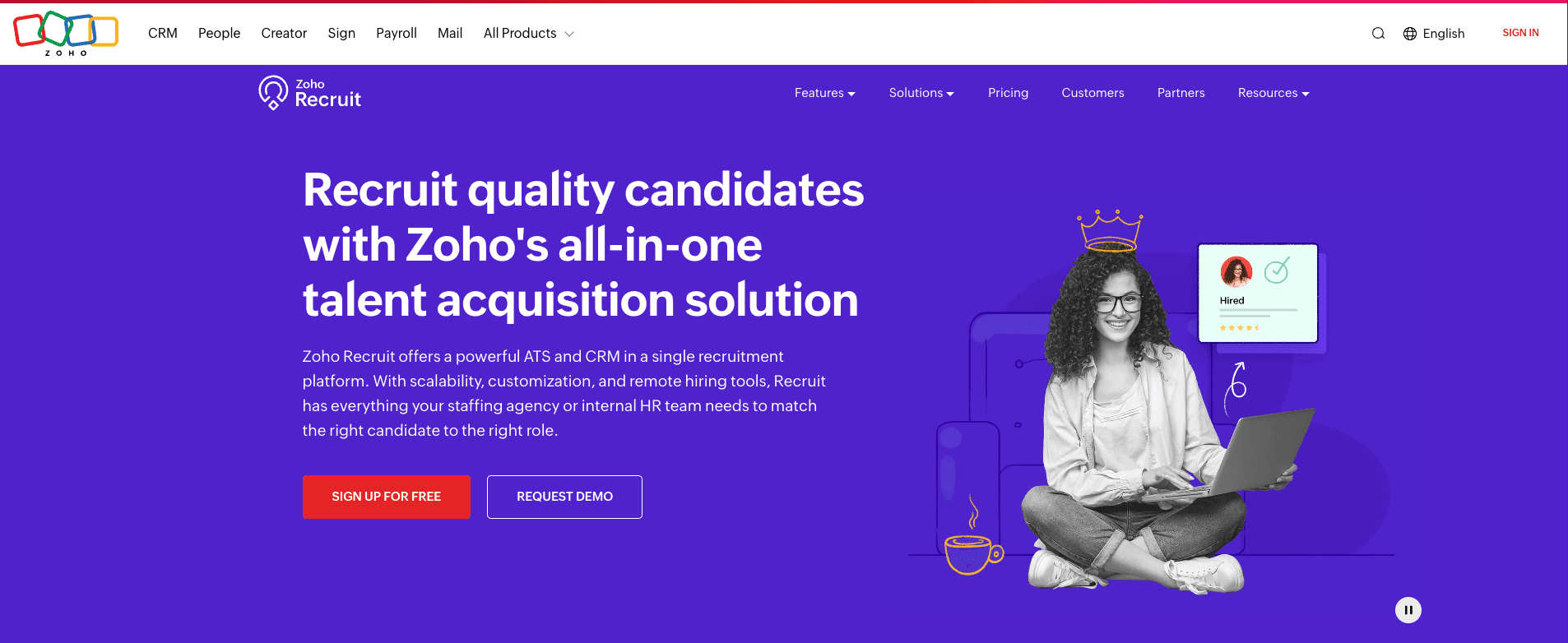
Best for: Integration lovers and India-based recruiters.
Zoho Recruit integrates beautifully with the broader Zoho suite (CRM, Mail, Docs). It’s cost-effective and reliable — especially for India/APAC teams managing high-volume hiring.
Strengths:
- Automated resume parsing.
- Custom career sites and job forms.
- Native integration with Zoho apps and Google Workspace.
Pricing: Standard Plan: ~$15/user/month (100 active jobs)
- Professional Plan: ~$30/user/month (AI matching, analytics, custom reports)
- Enterprise Plan: ~$45/user/month (client portals, automation, custom roles)
Free Trial: Yes
9. Recruitee
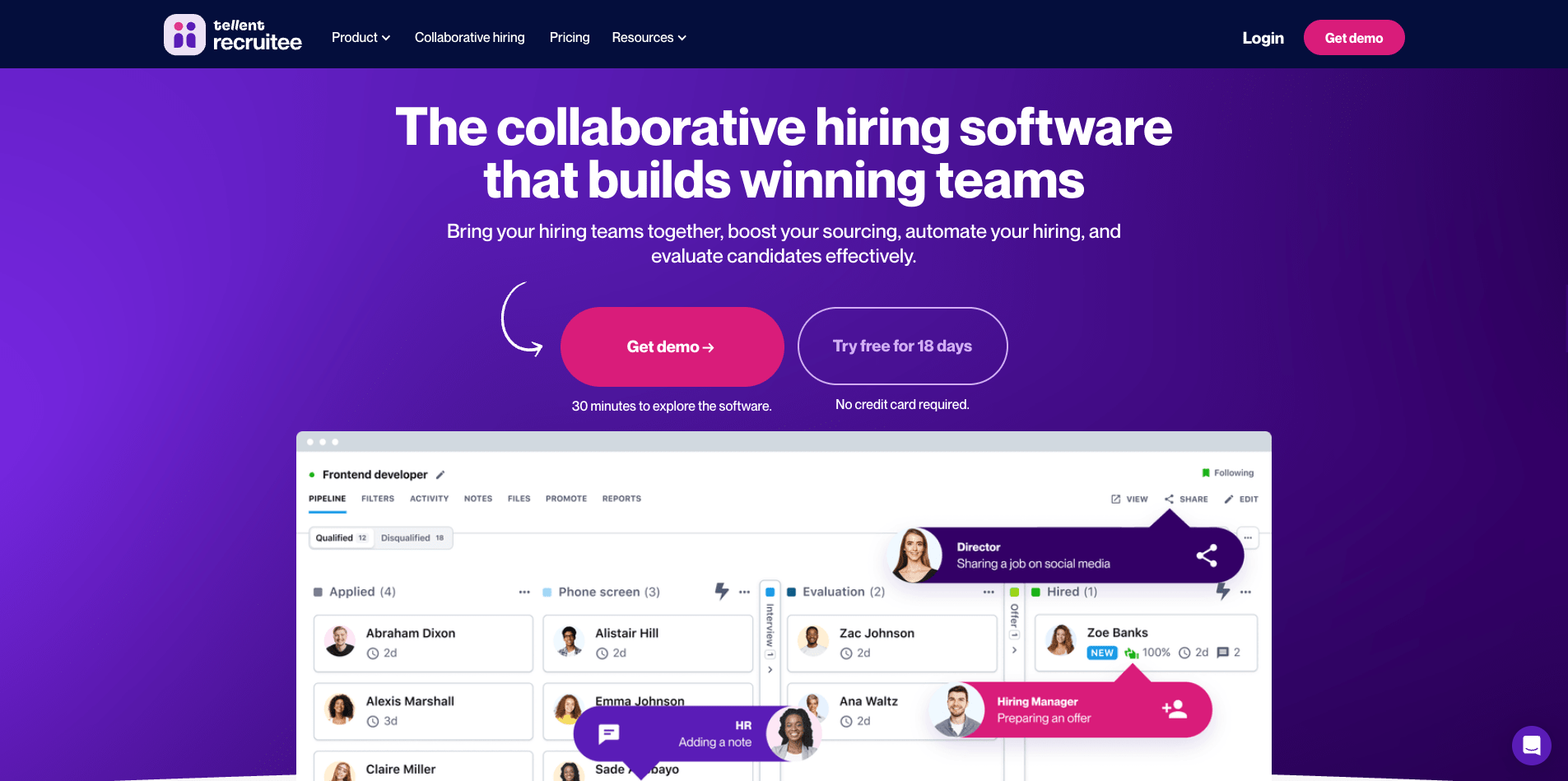
Best for: Collaborative hiring and ease of use.
Recruitee wins on UI and team collaboration features. It’s great for remote teams or companies with decentralized hiring teams.
Why Teams Love It:
- Simple interface for non-HR teammates.
- Easy feedback collection.
- Role-based permissions.
Pricing: tarts at around $295/month, scaling up to $1,500/month depending on features and company size
Free Trial: (18-days)
10. Workable
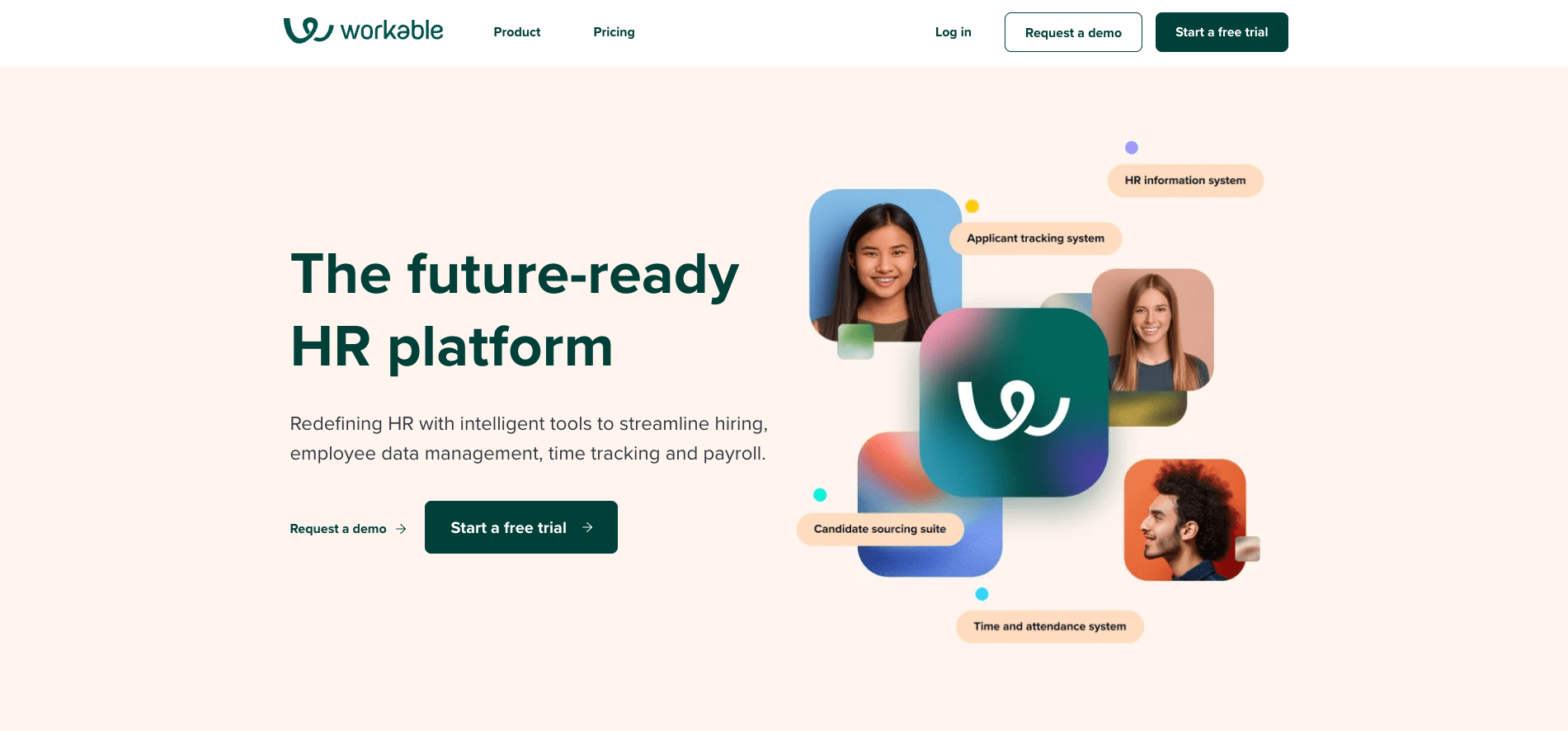
Best for: Straightforward sourcing automation.
Workable excels in candidate sourcing — integrating with dozens of job boards, LinkedIn, and more. However, its AI features are lighter than tools like Quick Recruit or Manatal.
Use it if:
- You care more about top-of-funnel sourcing.
- You want an intuitive system with minimal training.
Pricing: Starts around $360/month and it is too costly compared to other platforms
Free Trial:
11. TurboHire / iSmartRecruit
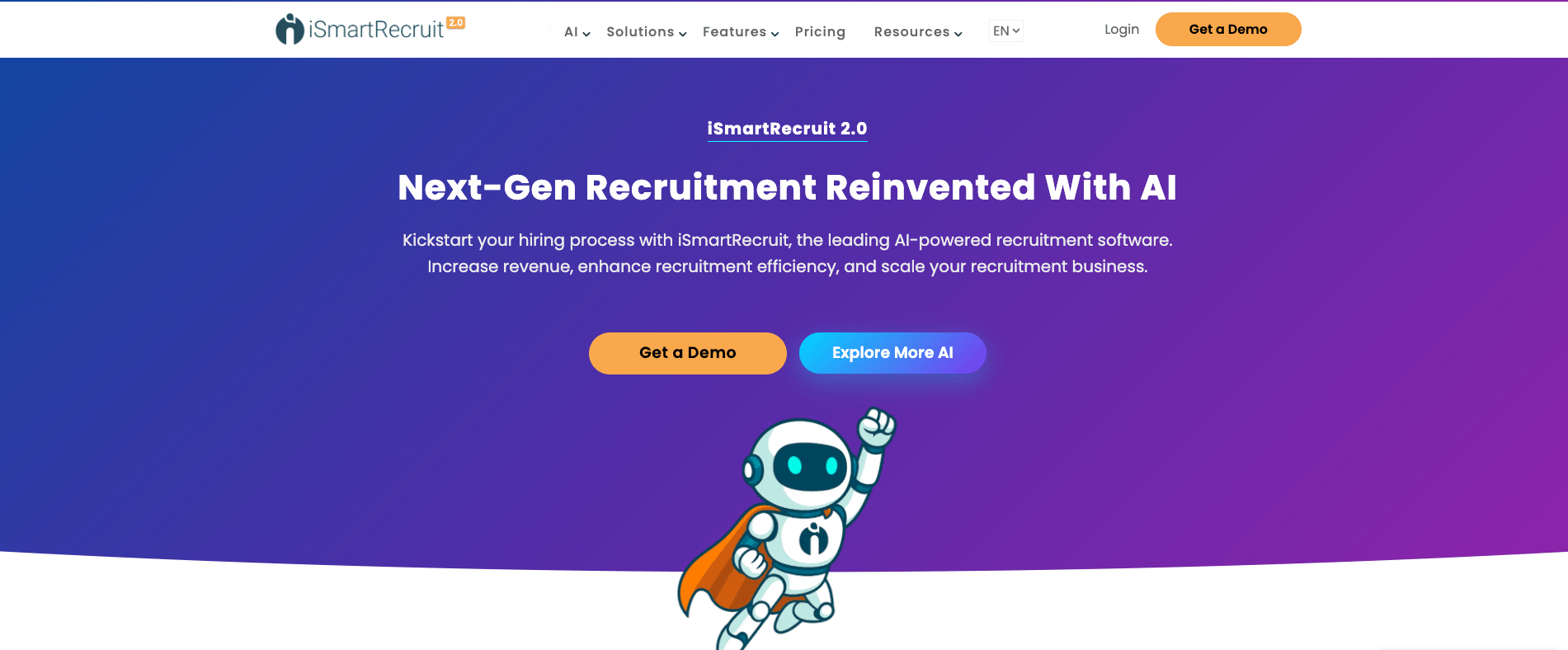
Best for: Indian and APAC recruiters needing regional compliance and localized features.
These platforms support vernacular languages, local job boards, and compliance rules (like India’s new data protection laws). While not as feature-rich globally, they are perfect for India-based firms or staffing agencies.
Standout features:
- Local integrations (e.g., Naukri, Shine)
- Affordable pricing tiers
- Strong resume parsing
Pricing: Varies
Free Trial:
How to Choose the Right Automation Tool for Your Team
Choosing a recruitment automation tool isn’t like picking a new messaging app. This decision impacts your team’s productivity, your candidate experience, and ultimately, the quality of hires. So how do you decide what’s best for your company?
Let’s break it down — step by step — with a recruiter’s eye and a founder’s urgency.
1. Define Your Hiring Volume and Workflow Needs
Are you hiring 3 roles per month or 30? Do you need deep AI analytics or just want to automate resume screening?
- Startups & small teams: You might only need resume parsing, interview scheduling, and candidate scoring. Lightweight tools like Breezy HR or Manatal could be perfect.
- Mid-sized teams: Think of hybrid tools that combine ATS and automation — like Lever or Zoho Recruit.
- Enterprise-level hiring: You’ll likely need full-stack tools like Quick Recruit or Greenhouse that integrate with existing systems, offer advanced analytics, and support global teams.
The key? Don’t overbuy. Find a tool that fits your current needs with room to grow.
2. Check for Integration
No matter how powerful a tool is, it’s useless if it doesn’t play nicely with your stack.
Look for tools that offer:
- Native integrations (Slack, Google Meet, Zoom, Outlook)
- API access for custom workflows
- Zapier compatibility if you want to connect apps without code
For example:
- Quick Recruit integrates seamlessly with most ATS and CRMs.
- Greenhouse offers one of the largest integration marketplaces.
- Zoho Recruit works great if you’re already using the Zoho Suite.
Avoid tools that require heavy manual workarounds. It kills productivity.
3. Balance AI Power with Human Oversight
Let’s be real: AI is incredible — but it’s not perfect.
Use automation for:
- Screening
- Resume parsing
- Scheduling
- Candidate matching
But let humans handle:
- Final interviews
- Culture-fit assessments
- Offer negotiations
The goal isn’t to remove humans — it’s to let them focus on decisions, not data entry.
“Automation should enhance your instincts, not replace them.”
4. Consider Local Support and Compliance
If you’re hiring in regulated markets (like the EU, India, or Canada), you’ll need to prioritize:
- Data privacy compliance (GDPR, India’s DPDP Bill)
- Cloud hosting regulations (local data centers)
- Language support for candidates and hiring teams
India-based teams, for example, benefit from tools like ,Quick Recruit ,Zoho Recruit, which are designed with regional compliance in mind.
Always check for:
- Data encryption standards
- Candidate consent features
- Transparent data storage policies
5. Run a Pilot Before You Commit
This step is non-negotiable.
Before fully rolling out a tool:
- Test it with 1–2 roles or departments.
- Get feedback from hiring managers.
- Measure changes in time-to-hire, candidate satisfaction, and recruiter workload.
This trial period often reveals if the tool’s AI is actually smart or just good marketing.
Pro Tip: Quick Recruit offers a guided workflow audit where they test the AI suite against your real-world needs — worth checking out.
Want a guided recommendation?
Let the Quick Recruit team audit your hiring process and suggest the perfect automation setup
— Book a 15-min free consultation.
Quick Recruit’s 2026 Recruiter’s Automation Checklist
Before you finalize a tool, make sure it checks these boxes:
AI Resume Parsing
Video Interview Automation
Bias-Free Candidate Scoring
Integration with Slack/Zoom/Google Meet
ATS or CRM Compatibility
Analytics Dashboard
Local Compliance Support
Customizable Pipelines
Free Trial or Demo
Print this out. Share it with your team. Let it guide your stack decisions.
The Future of Recruitment Automation (2026–2030)
The next wave of recruitment automation isn’t just about saving time — it’s about transforming how we hire, who we hire, and why we hire them.
Here’s a sharper, future-forward look at what’s coming:
1. AI Recruiters Will Replace Phone Screens
By 2030, your first recruiter might not be human — and that’s not a bad thing. Conversational AI bots will speak naturally, analyze tone and sentiment, and ask role-specific questions — all in real-time. Think of it as a smarter, unbiased gatekeeper.
2. Predictive Hiring Will Get Scary Accurate
AI will crunch data from millions of hires, your own internal benchmarks, and even team dynamics to tell you:
“This candidate has an 87% chance of outperforming in 6 months.”
Hiring won’t be reactive anymore — it’ll be data-led and forward-thinking.
3. Resumes Will Die. Skill Graphs Will Take Over
Static resumes? Outdated. The future is real-time skill clouds — dynamic profiles built from verified achievements, test scores, and past project performance. No more guesswork — just facts.
“By 2030, the smartest companies won’t just hire faster — they’ll hire smarter, with AI guiding every step.” — Quick Recruit Team
Final Thoughts
Let’s be blunt: In 2026, speed wins. But only if you don’t compromise on quality or fairness.
Recruitment automation isn’t just a trend — it’s your strategic edge. It helps you:
- Hire faster
- Eliminate bias
- Streamline team collaboration
- Deliver better candidate experiences
From all-in-one AI suites like Quick Recruit, to lightweight startup tools like Breezy HR, the landscape is rich with powerful options.
If you’re still stuck deciding, don’t overthink it. Pick one. Test it. Improve it.
Because the future of hiring isn’t coming — it’s already here.
Curious how Quick Recruit fits into your hiring stack?