
Introduction
Hiring the right talent has become one of the biggest challenges for companies across industries. Organizations are constantly looking for skilled professionals who not only match the required qualifications but also fit their company culture and long-term goals.
To overcome hiring challenges, many companies have started adopting recruitment software to improve their hiring process. These solutions help recruiters manage candidates, automate repetitive tasks, organize hiring workflows, and make recruitment more efficient.
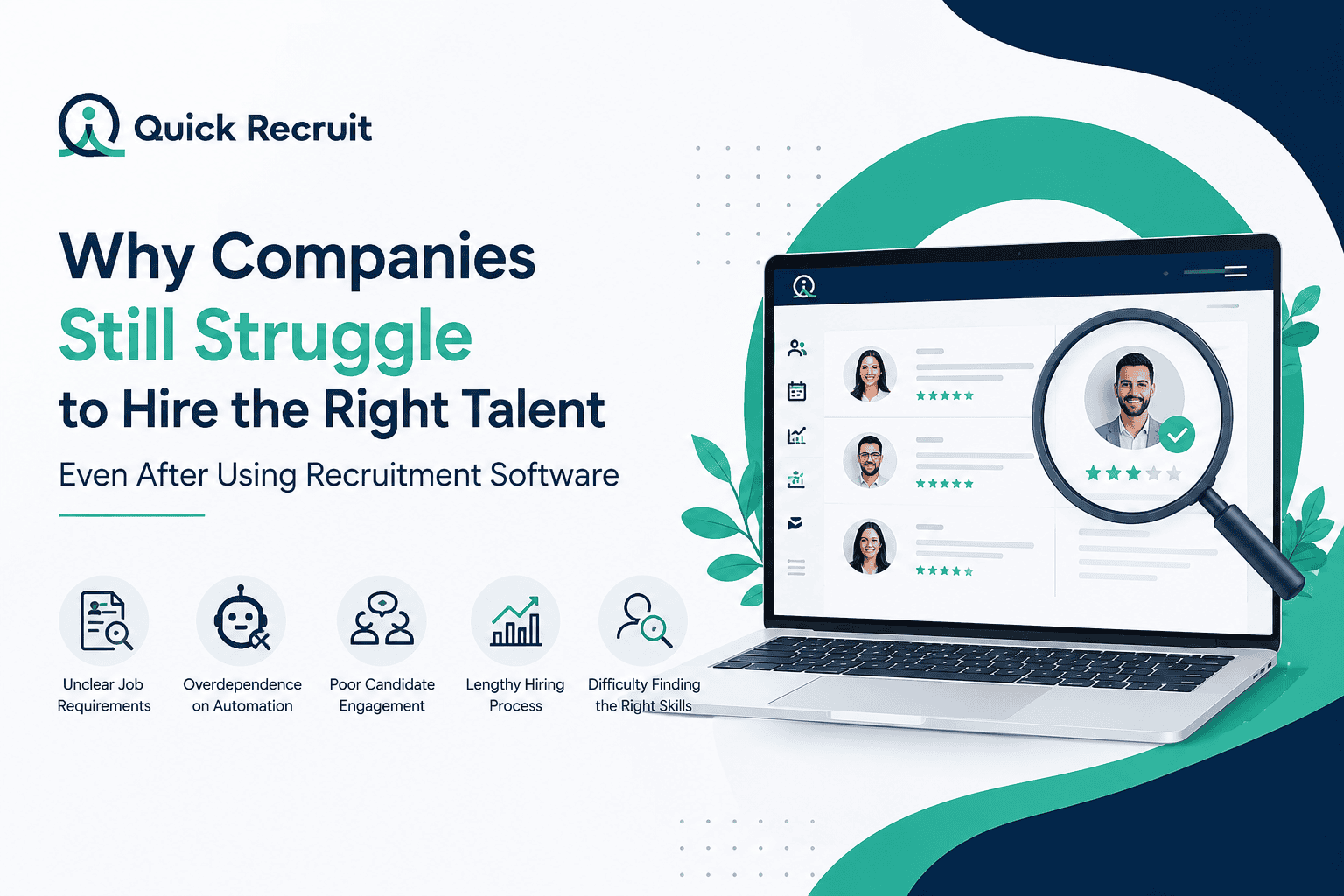
However, many companies still struggle to hire the right talent even after implementing recruitment software.
This does not mean recruitment software is ineffective. In fact, modern recruitment technology has transformed the way companies attract, evaluate, and hire candidates. The challenge is that successful hiring depends on multiple factors beyond just having the right technology.
A strong recruitment strategy requires a combination of effective processes, clear communication, skilled recruiters, accurate job requirements, and the right use of technology.
In this blog, we will explore why companies continue to face hiring challenges even after investing in recruitment software and how they can improve their recruitment approach.
1. Unclear Job Requirements Lead to Wrong Candidate Matches
One of the most common reasons companies struggle to hire the right talent is unclear job requirements.
Before starting the recruitment process, companies need to clearly define what they are looking for in a candidate. This includes required skills, experience level, technical knowledge, responsibilities, and expectations from the role.
When job descriptions are unclear or too generic, recruiters may attract a large number of applicants who do not actually match the position. This increases screening time and makes it harder to identify suitable candidates.
Recruitment software can help organize and filter applicants, but it depends on the quality of information provided by the hiring team. If the job requirements are not properly defined, even advanced recruitment tools may not deliver accurate results.
Companies should focus on creating detailed job descriptions that clearly communicate the role, responsibilities, and expectations to attract more relevant candidates.
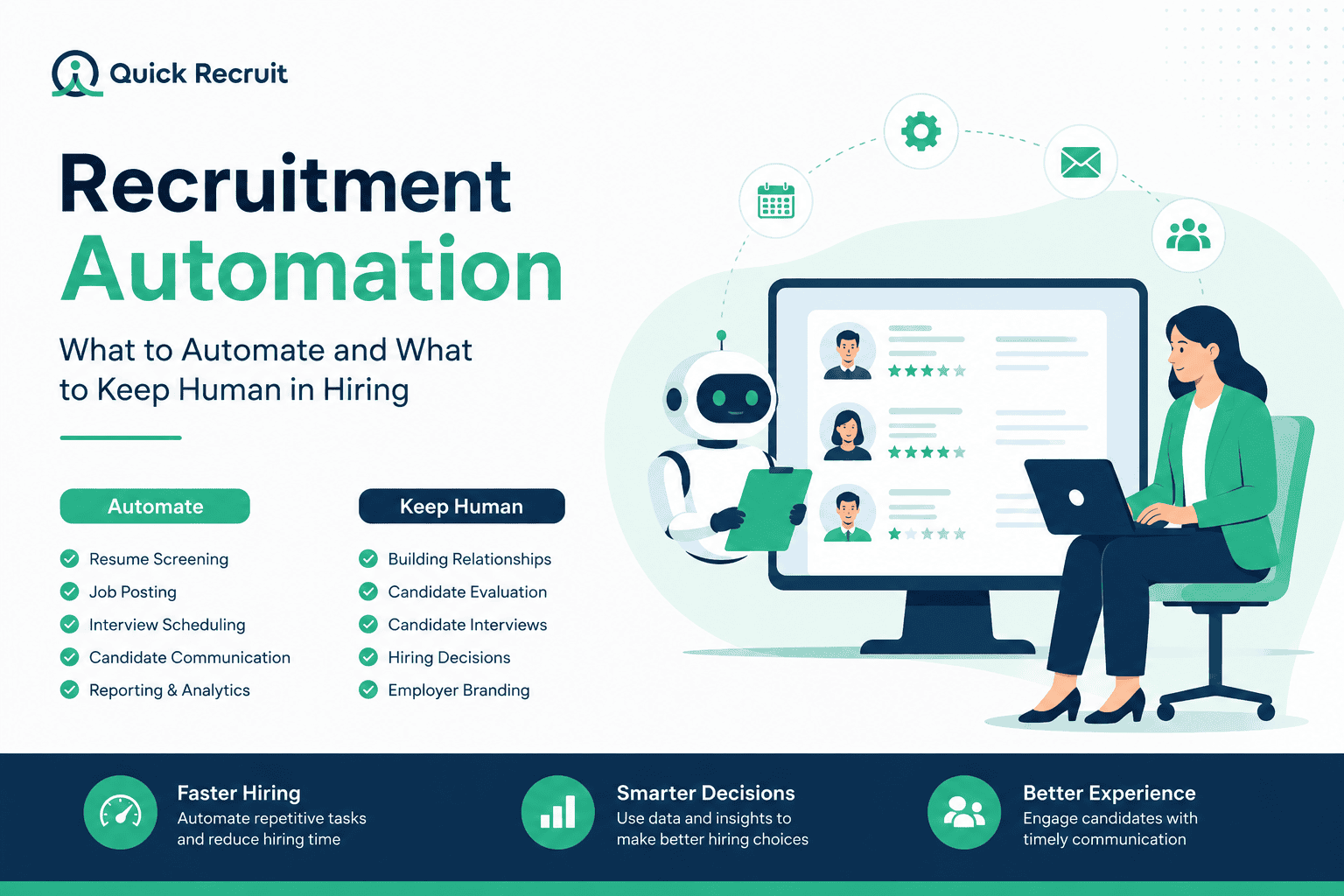
2. Overdependence on Automated Screening
Automation has improved many areas of recruitment, especially candidate screening and resume management. Recruitment software allows recruiters to quickly review applications, identify relevant profiles, and reduce manual effort.
However, relying completely on automated screening can sometimes create challenges.
A candidate’s potential cannot always be determined through keywords, job titles, or years of experience alone. Some candidates may have transferable skills, unique experiences, or career growth potential that may not appear through basic filtering.
For example, a candidate may not use the exact keyword mentioned in a job description but may still have the necessary skills and experience required for the role.
The best hiring decisions happen when technology supports recruiters rather than replacing human evaluation. Recruiters should use recruitment software insights along with their own judgment to identify the best candidates.
3. Poor Candidate Engagement During the Hiring Process
Finding qualified candidates is only one part of successful recruitment. Keeping candidates engaged throughout the hiring journey is equally important.
Many companies lose talented candidates because of slow responses, delayed interview scheduling, or unclear communication.
Today’s candidates expect a smooth and transparent hiring experience. If the recruitment process takes too long, skilled professionals may move forward with other opportunities.
Recruitment software can help companies improve candidate communication through automated updates, scheduling tools, and organized candidate tracking. However, companies must also create a candidate-focused approach.
Regular communication, timely feedback, and a simple application process can significantly improve the candidate experience.
4. Lengthy and Complicated Hiring Processes
A slow hiring process is another major reason companies struggle to hire the right talent.
Multiple approval stages, unnecessary interviews, delayed decision-making, and poor coordination between recruiters and hiring managers can increase the time required to fill a position.
When companies take too long to make hiring decisions, they risk losing qualified candidates to competitors.
Recruitment software helps streamline workflows by keeping candidate information organized and improving collaboration between hiring teams. However, companies must also review their internal processes and remove unnecessary delays.
A faster hiring process does not mean reducing quality. It means creating an efficient workflow that allows companies to identify and secure the right candidates at the right time.
5. Difficulty Finding Candidates With the Right Skills
The job market is constantly changing, and many industries are facing a shortage of candidates with specialized skills.
Companies may receive hundreds of applications but still struggle to find candidates who meet their specific requirements.
This happens because attracting talent requires more than simply posting job openings. Organizations need effective sourcing strategies to reach the right audience.
Recruitment software can support candidate sourcing by helping recruiters manage talent pools, track applicants, and identify potential candidates. However, companies also need strong employer branding, networking strategies, and targeted recruitment campaigns.
Building relationships with potential candidates before a hiring need arises can help companies access better talent faster.
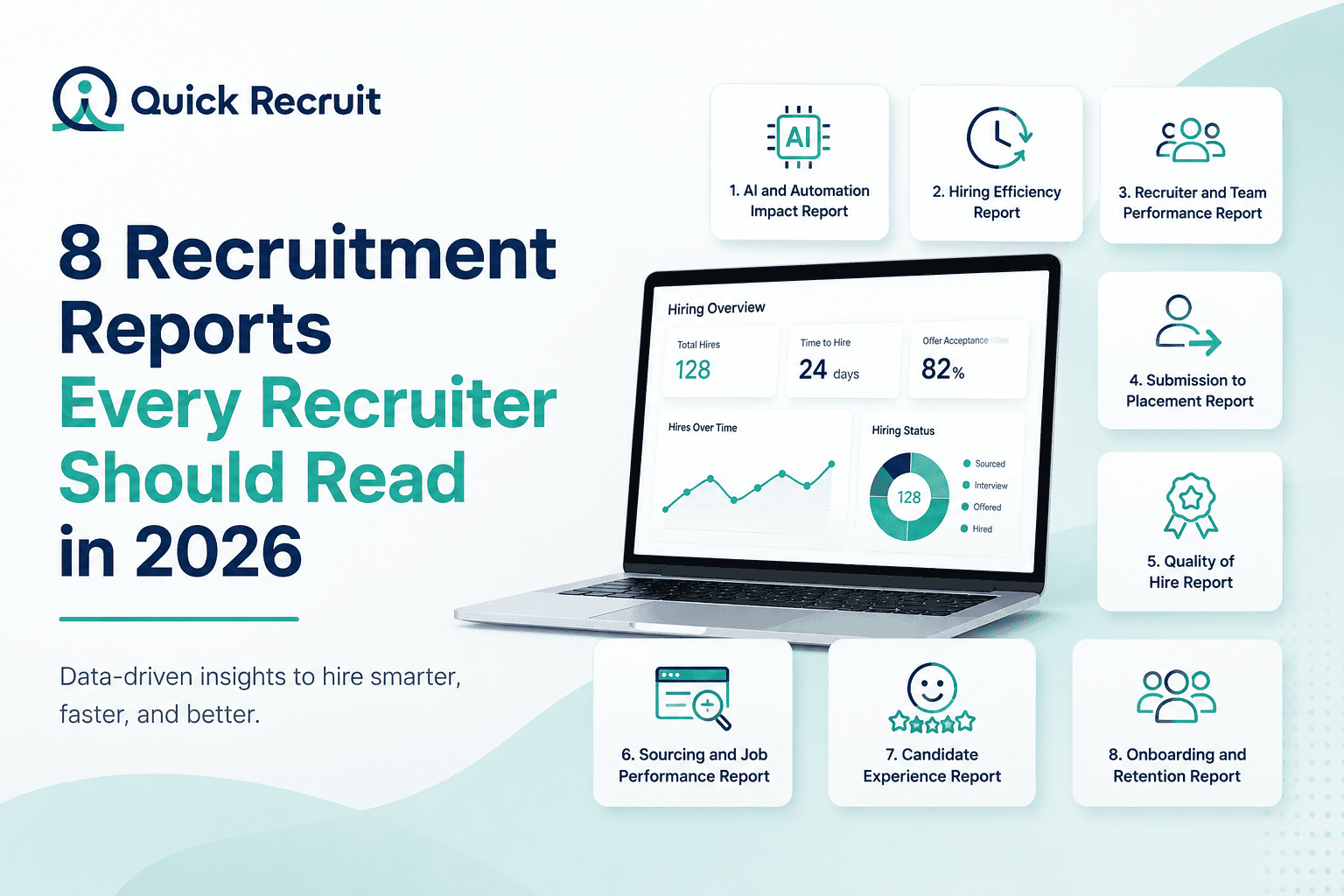
6. Lack of Effective Recruitment Data Analysis
Many companies collect recruitment data but fail to use it effectively.
Important recruitment metrics such as:
- Time-to-hire
- Cost-per-hire
- Candidate source performance
- Interview success rates
- Offer acceptance rates
- Candidate drop-off rates
can provide valuable insights into the hiring process.
Without analyzing this data, companies may continue repeating the same mistakes without understanding where improvements are needed.
Recruitment software provides access to useful hiring data, but companies need to actively analyze and apply these insights to improve their recruitment strategies.
Data-driven hiring helps organizations make better decisions, improve efficiency, and create a more predictable recruitment process.
7. Poor Collaboration Between Recruiters and Hiring Managers
Successful recruitment requires strong collaboration between recruiters and hiring managers.
Sometimes, recruiters understand the hiring process, while hiring managers have deeper knowledge about the role requirements. If both teams are not aligned, it can lead to delays, unclear expectations, and incorrect candidate evaluations.
Recruitment software can improve collaboration by providing a centralized platform where teams can share candidate information, feedback, and hiring updates.
However, technology alone cannot solve communication gaps. Regular discussions, clear responsibilities, and shared hiring goals are essential for better results.
8. Ignoring Employer Branding and Candidate Expectations
Companies often focus heavily on finding candidates but overlook how candidates view their organization.
In today’s competitive hiring market, candidates evaluate companies based on factors such as:
- Workplace culture
- Career growth opportunities
- Company reputation
- Employee experience
- Benefits and flexibility
If a company does not communicate its value effectively, attracting top talent becomes more difficult.
Recruitment software can improve the hiring workflow, but companies also need a strong employer brand to attract skilled professionals.
A positive employer image helps companies stand out and encourages more qualified candidates to apply.
9. Recruitment Technology Requires the Right Strategy
Investing in recruitment software is an important step toward improving hiring efficiency, but technology alone cannot guarantee successful recruitment.
Companies need the right strategy to get the maximum value from their recruitment tools.
This includes:
- Training recruiters on using the platform effectively
- Creating optimized hiring workflows
- Maintaining accurate candidate information
- Reviewing recruitment performance regularly
- Continuously improving hiring practices
When companies combine technology with effective recruitment strategies, they can create a more efficient and successful hiring process.
How Companies Can Improve Hiring Results With Recruitment Software
To overcome hiring challenges, companies should focus on using recruitment software as part of a complete recruitment strategy.
Some key improvements include:
Define Clear Hiring Goals
Understand the skills, experience, and qualities required before starting the recruitment process.
Improve Candidate Communication
Keep candidates updated and provide a smooth hiring experience.
Use Data for Better Decisions
Analyze recruitment metrics to identify improvement areas.
Balance Automation With Human Judgment
Use technology to improve efficiency while allowing recruiters to make informed decisions.
Build a Strong Talent Pipeline
Maintain relationships with potential candidates for future hiring needs.
Conclusion
Companies still struggle to hire the right talent even after using recruitment software because successful hiring depends on more than technology alone.
Recruitment software provides powerful capabilities to simplify hiring, improve candidate management, and increase recruiter productivity. However, companies must also focus on their recruitment strategy, candidate experience, communication, and decision-making process.
The future of hiring is not about replacing recruiters with technology. It is about combining the power of recruitment software with human expertise to create faster, smarter, and more effective hiring processes.
When companies use recruitment technology correctly and continuously improve their approach, they can overcome hiring challenges and build stronger teams.