
The hiring market has changed completely. Companies are no longer looking at just a few local applications; they are managing hundreds or thousands of resumes from all over the world. This creates a big workflow challenge for human resources: choosing between an Applicant Tracking System (ATS) and traditional Manual Recruitment.
This educational guide looks at both methods simply and honestly. We will look closely at the real-world operational realities, pressures, and challenges that hiring teams face under both systems.
1. How Manual Recruitment Works (And the Heavy Workload It Creates)
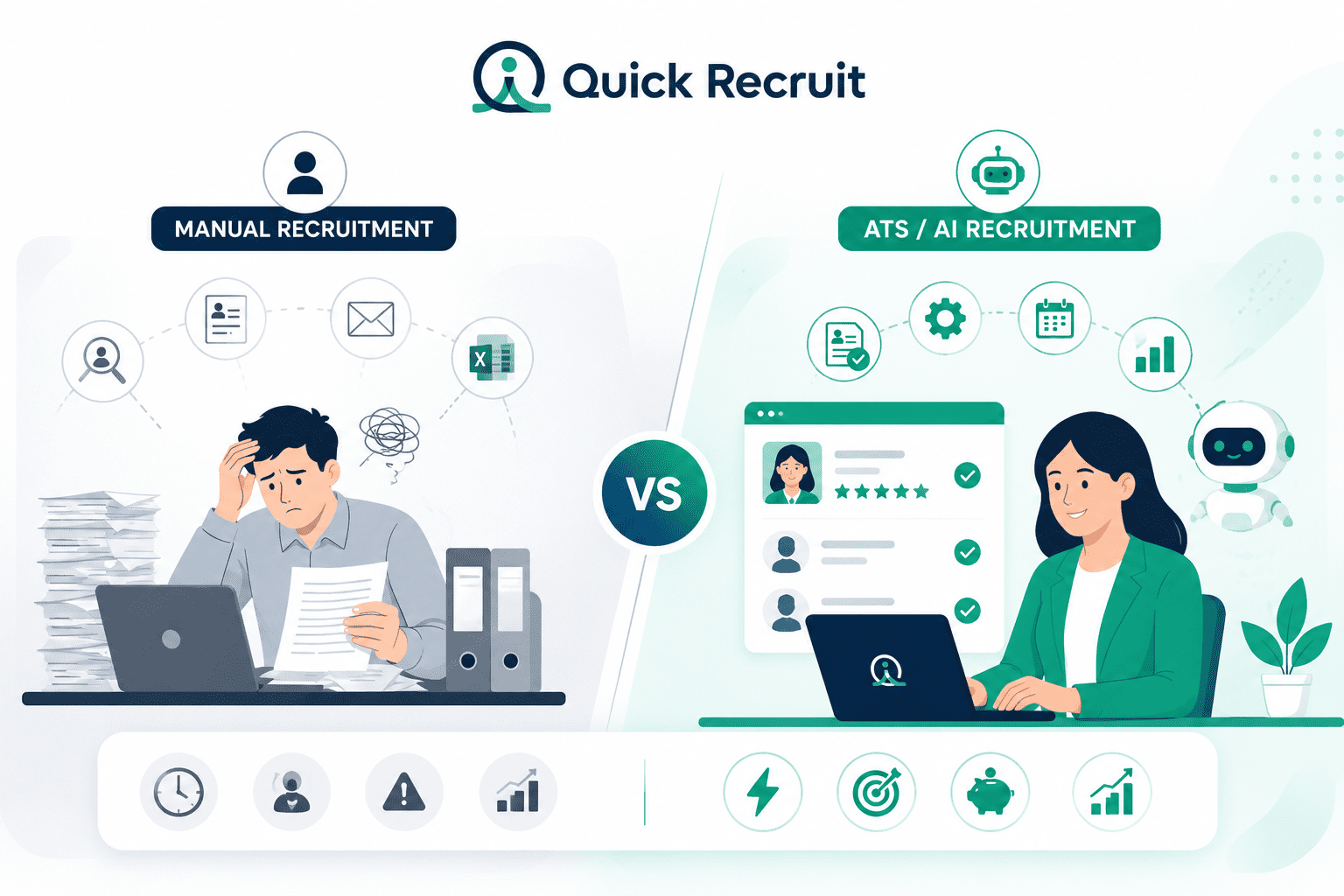
Manual recruitment relies entirely on human effort, one step at a time. For a growing company, the manual process looks like this:
- Sourcing: HR professionals must manually visit multiple job boards, copy candidate details, and post listings one by one.
- Screening: A team member must open and read every single curriculum vitae (CV) to find matches for the job description.
- Tracking: Important candidate data—like phone numbers and interview dates—must be typed by hand into simple spreadsheets like Microsoft Excel.
While human review is excellent for understanding a candidate’s unique story, the manual workflow creates severe time pressures. When a professional is forced to read hundreds of complex resumes back-to-back for hours, natural cognitive fatigue sets in. It is incredibly difficult to maintain identical focus levels at the end of an eight-hour shift as at the start. This makes manual tracking a highly stressful framework for teams handling growing pipelines.
📖 Learn More: To understand how modern industries build strategic talent pipelines and manage scaling challenges, explore the comprehensive Talent Acquisition Industry Framework.
2. How Automated Recruitment Works (ATS & AI)
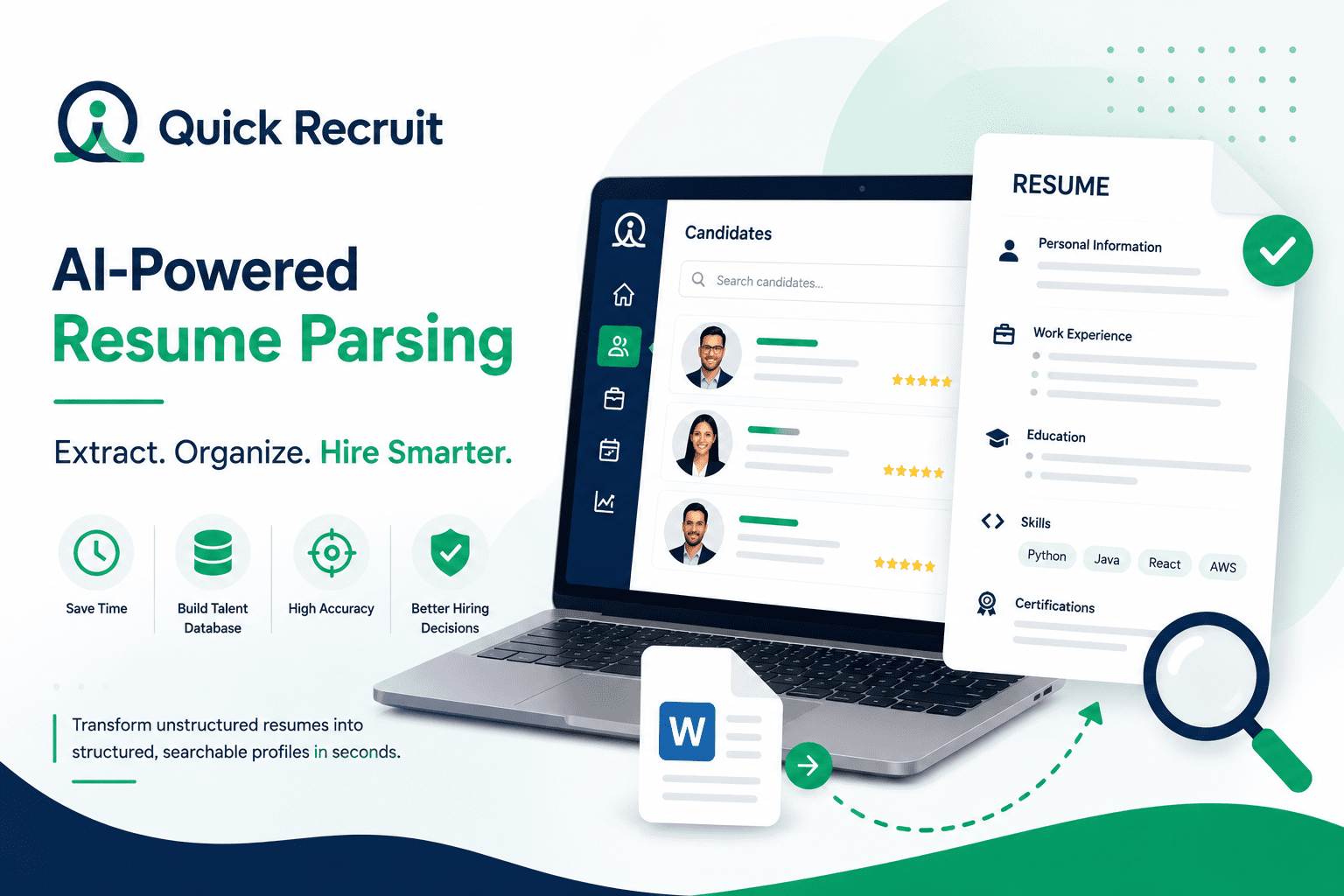
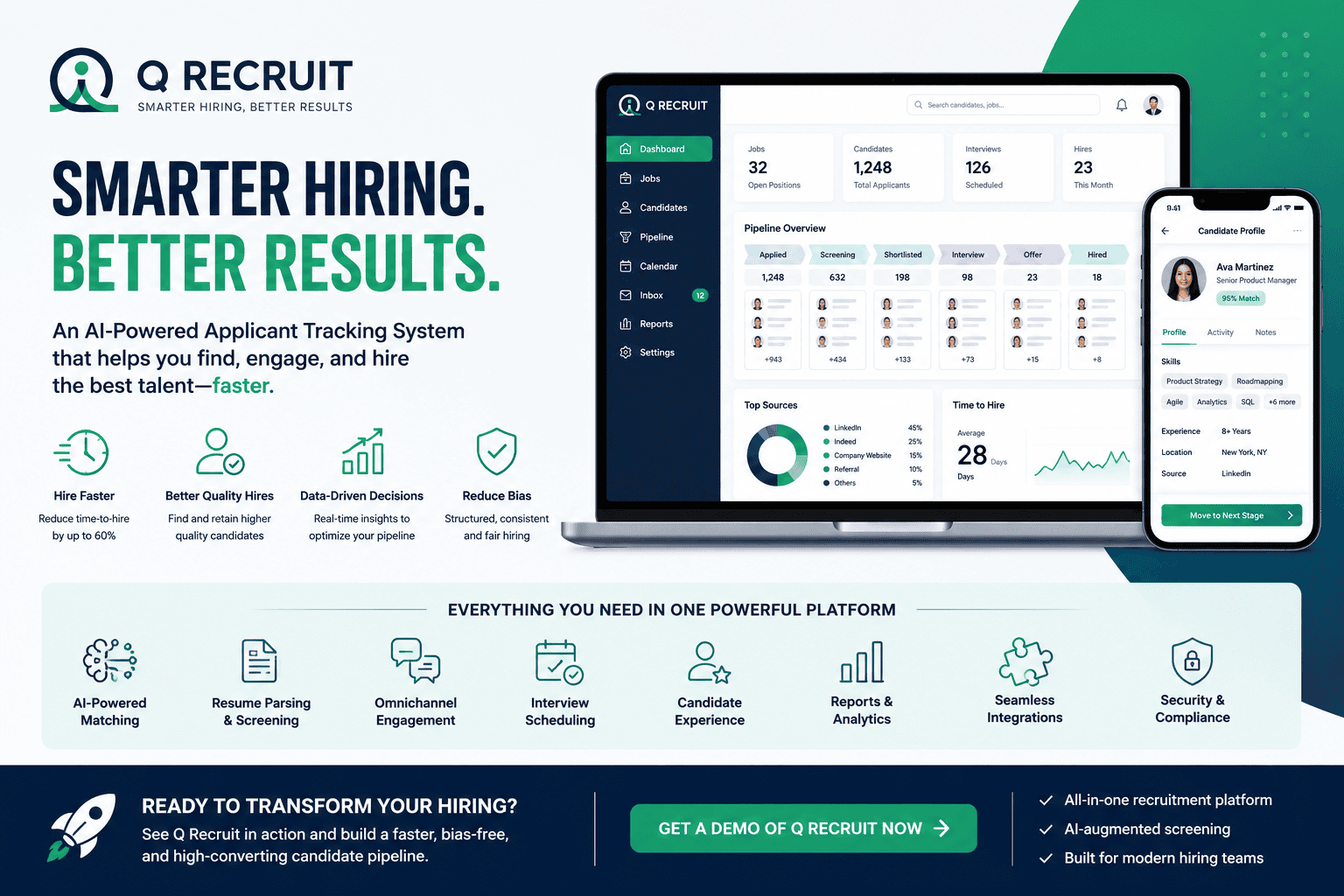
An enterprise-grade Applicant Tracking System or Recruitment Management System works like a central digital library. Instead of forcing teams to manage messy email folders and endless downloads, a Recruitment CRM saves candidate files as organized, searchable profiles automatically.
Modern hiring uses AI Recruitment Software to assist teams with data processing. These platforms use a Resume Screening AI that looks for skills conceptually, rather than just searching for exact words. By moving to an AI Hiring Platform, a company switches from slow paper sorting to fast, automated data processing.
3. Simple Comparison: Workflow Pressures vs. Automated Speed
| Feature | The Manual Workflow Challenge | The Automated Ecosystem (ATS / AI) |
| Reading Resumes | High administrative burden; risk of natural human fatigue. | Instant sorting using Candidate Screening Software. |
| Handling Big Volumes | Causes severe bottlenecks and delays for the HR team. | Designed as Bulk Hiring Software to handle thousands of profiles at once. |
| Speed | Requires 4 to 7 minutes of manual reading per application. | Takes less than a second per resume to parse data. |
| Tasks & Scheduling | Hours spent sending emails and coordinating calendars. | Uses Hiring Automation to send updates and book interviews automatically. |
| Interviews | Difficult to keep structured when managing massive schedules. | Uses structured Interview as a Service and Video Interview Software. |
4. The Math: Why Paper and Spreadsheets Create Bottlenecks
It is easy to see why manual recruitment becomes overwhelming when you look at basic numbers.
Let’s say a company opens a major Campus Recruitment Software drive or a public job post and receives 5,000 applications.
If an HR professional spends just 3 minutes skim-reading each resume to make an initial assessment:
- 5,000 resumes × 3 minutes = 15,000 minutes.
- 15,000 minutes = 250 hours of pure reading time.
For a single worker doing a standard 40-hour work week with zero breaks or other meetings, this takes over 6 weeks just to read the resumes the first time. Because this volume is humanly impossible to manage alone, teams are often forced to work under extreme stress, resulting in hiring delays that cause top-tier talent to accept offers elsewhere.
In contrast, a modern Talent Acquisition Software platform can scan those 5,000 resumes for basic requirements in less than two minutes, removing the administrative backlog instantly.
5. The Risk of Relying 100% on Computers
Even though ATS Software removes heavy administrative stress, relying entirely on algorithms brings new challenges. AI models learn from old data. If a company’s past hiring trends favored specific colleges or backgrounds, the AI might accidentally repeat those patterns, filtering out highly qualified, non-traditional candidates.
Also, some applicants learn to “game the system” by stuffing their resumes with invisible keywords. This can trick the software into ranking them highly, forcing hiring teams to deal with unqualified profiles that successfully bypassed the automated filters. This shows that automation is a supportive tool, not a complete replacement for human insight.
6. The Best Balance: Supporting Human Teams with Automation
The most efficient hiring framework does not choose one over the other. It uses a modern HR Tech Platform to handle repetitive, time-consuming data tasks, freeing human professionals to focus on high-value decisions.
- The Top of the Funnel: Software handles the initial data ingestion. The AI Hiring Platform organizes applications, and automated emails keep candidates informed about their status.
- The Evaluation: The system can connect with third-party Interview as a Service experts to run objective technical tests, ensuring internal staff aren’t pulled away from their core responsibilities.
- The Final Choice: Once the software manages the heavy volume and presents the top choices, human managers take over. Relieved from hours of manual sorting, they can dedicate their energy to meaningful conversations: assessing cultural alignment, understanding candidate career goals, and building strong hiring relationships.
Summary
Choosing between an ATS and manual recruiting comes down to resource management. Manual tracking burdens human teams with impossible volumes of administrative data, while pure automation risks losing human nuance. True operational efficiency happens when software handles the heavy data tracking, allowing human professionals to focus their energy where it matters most: making the final, personal hiring decisions.