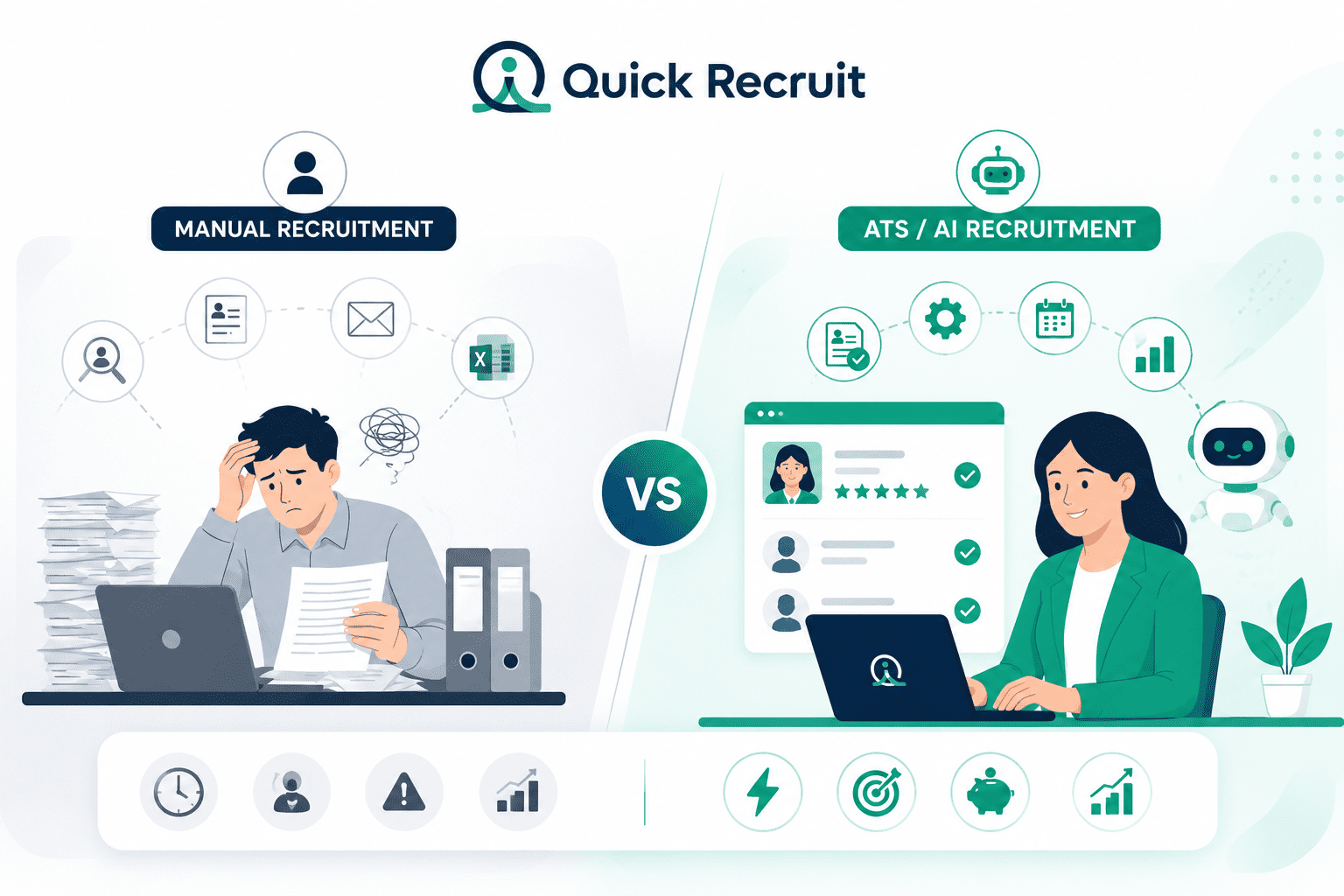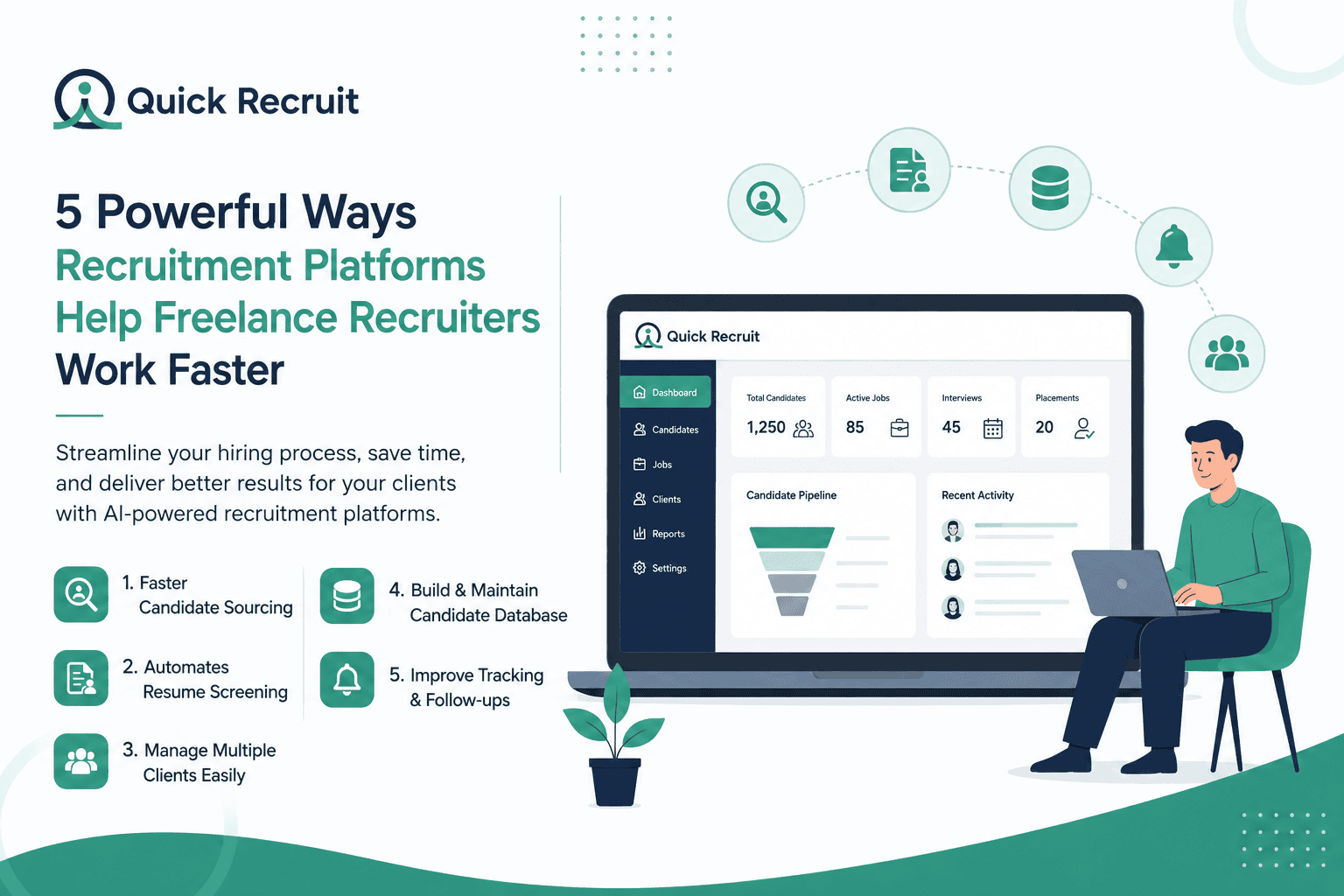

Finding the right talent can feel like searching for a needle in a digital haystack. With the average corporate job posting attracting 250+ applications, HR teams are often buried under a mountain of resumes.
Enter the Applicant Tracking System (ATS).
No longer just a digital filing cabinet, modern ATS platforms are intelligent, AI-augmented recruitment engines. They are designed to automate repetitive tasks, optimize the hiring funnel, and help talent acquisition (TA) teams surface the absolute best candidates.
Whether you are looking to purchase your first recruiting platform or upgrading your current HR tech stack, this complete guide breaks down everything you need to know about what an ATS does, its real business value, and how to choose the right software.
What is an Applicant Tracking System?
An Applicant Tracking System (ATS) is a centralized software application designed to manage, streamline, and automate an organization’s entire recruitment and hiring process.
Instead of juggling a messy web of spreadsheets, overflowing email inboxes, and disconnected job boards, an ATS acts as a single source of truth. It tracks a candidate’s journey from the moment they click “Apply” on a job board to the minute they sign their official offer letter.
[Job Requisition] ➔ [Job Board Distribution] ➔ [Resume Screening] ➔ [Interview Coordination] ➔ [Offer Letter]
Who Uses an ATS?
While applicant tracking systems were once a luxury exclusive to Fortune 500 enterprises, the rise of cloud-based SaaS solutions has democratized the technology. Today, nearly 99% of Fortune 500 companies and over 70% of large-to-mid-sized corporations rely on an ATS to fuel their workforce growth.
How an ATS Works: The Recruitment Lifecycle
An ATS works behind the scenes by transforming raw applicant data into a structured pipeline. The process typically unfolds across five core stages:
1. Job Creation & Distribution
The process begins when a hiring manager submits a job requisition (req). Once approved within the platform, the recruiter uses the ATS to craft the job description and automatically distribute the posting across dozens of channels simultaneously—including internal career pages, Google Jobs, LinkedIn, and corporate job boards like Indeed.
2. Resume Parsing & Screening
When candidates apply, their application materials flow directly into the system. The ATS uses a resume parser—an algorithm that strips away complex formatting and converts a resume into structured text data. The system then indexes this data, mapping contact info, work history, and hard skills into a clean candidate profile.
3. AI-Powered Ranking & Filtering
Modern, AI-augmented ATS platforms do more than just search for exact keyword matches. They use semantic intelligence to evaluate how well a candidate’s overall profile matches the context of the job description. Candidates who meet the threshold are flagged and ranked for immediate human review, while duplicate applications are automatically merged.
4. Automated Interview Management
Once a recruiter approves a candidate, the ATS steps in to handle coordination. Top platforms offer self-scheduling capabilities, allowing candidates to select an open slot from an interviewer’s synced calendar. It automatically distributes interview scorecards, coordinates video conferencing links, and collects panel feedback in one place.
5. Deep-Dive Reports & Pipeline Analytics
Modern recruiting software goes far beyond data storage—it acts as an intelligence engine. High-performance talent acquisition teams leverage the reporting dashboard to gain a bird’s-eye view of their entire candidate pipeline. By tracking real-time movement, you can make smarter, more data-driven hiring decisions
The Strategic Value of an ATS
Investing in recruitment tech isn’t just about making HR’s life easier—it has a direct, quantifiable impact on an organization’s bottom line. Industry data underscores why modern companies view an ATS as an essential investment:
- Accelerated Time-to-Hire: According to research from SHRM, the average time to fill sits around 44 days across many roles. Recruiting teams leveraging an advanced ATS report up to a 60% decrease in the average hiring cycle by eliminating manual screening and communication delays.
- Boosted Productivity: Teams deploying AI-augmented recruitment software report a 49% increase in recruiter productivity and a 55% faster time-to-hire, freeing up talent acquisition teams to focus on building human relationships and conducting deeper interviews.
- Elevated Talent Quality: Inbound applications are often hit-or-miss. However, 62% of ATS-using teams report finding significantly higher-quality candidates, while 79% of recruiters state that overall new-hire retention quality increased post-implementation due to better-aligned job matchmaking.
Core Features to Look for in Modern Recruiting Software
If you are evaluating software vendors, ensure your shortlist includes platforms that offer these non-negotiable functionalities:
| Feature Category | Critical Capabilities | Business Value |
| Intelligent AI Matching | Skill/competency indexing, predictive drop-off analytics, candidate ranking. | Bypasses basic keyword stuffing to find genuine talent matches. |
| Advanced AI Parsing | Multilingual parsing, deep semantic text extraction, rich profile structure mapping. | Automatically strips complex formatting out of resumes and formats data into standard fields without errors. |
| Omnichannel Integration | Unified inbox syncing email, SMS, WhatsApp, and social media outreach natively. | Allows recruiters to engage candidates where they actually respond, dramatically lifting open rates. |
| Automated Screening | Tailored knock-out questions, asynchronous video pitches, identity validation workflows. | Filters out unqualified applicants instantly before they ever reach a recruiter’s manual review pipeline. |
| Candidate Experience | Mobile-responsive portals, automated status updates, calendar self-scheduling. | Drastically reduces the massive applicant drop-off rate seen on legacy, clunky systems. |
| Ecosystem Integrations | Native API hooks to HRIS platforms, background checks, video tools (Zoom/Teams). | Eliminates time-consuming manual data entry and stitches disjointed point solutions together. |
| Analytics & Reporting | Real-time funnel tracking, candidate velocity logs, source-of-hire placement metrics. | Uncovers hidden pipeline bottlenecks to help teams make smarter, faster, and data-driven hiring decisions. |
3 Essential Implementation Rules for Talent Leaders
Transitioning to a new applicant tracking system requires change management. To ensure a successful rollout, prioritize these three steps:
1.Establish Unified Funnel Definitions:Prerequisite.
Before configuring your software, sit down with your hiring managers and align on shared definitions for pipeline stages. What exactly constitutes a “Screened” candidate vs. a “Shortlisted” candidate? Clean data depends entirely on consistent operational logging.
2.Optimize for Mobile Applications:Configuration Stage.
With a vast majority of job seekers searching on smartphones, ensure your application form is clean, direct, and doesn’t require uploading multiple files or re-typing an entire resume. Minimize application friction immediately.
3.Build Out Interview Kits & Scorecards:Launch Stage.
Equip your interviewing teams with structured scorecards built right into the ATS. This removes subjective bias from the interview loop, ensuring all candidates are evaluated against identical, standardized performance metrics.
Looking Ahead: As identity misrepresentation grows across digital landscapes, the next frontier for applicant tracking systems focuses heavily on built-in verification workflows, such as integrated asynchronous video screening and biometric identity validation. Building a robust tech stack today prepares your talent acquisition team for the challenges of tomorrow.
The Bottom Line: Why an ATS is No Longer Optional
Navigating talent acquisition without an Applicant Tracking System is like flying blind. What once served as a simple database for resumes has evolved into an AI-augmented intelligence engine capable of driving real, measurable revenue business value.
By implementing an advanced ATS equipped with multilingual AI parsing, structured smart screening, omnichannel outreach, and deep-dive pipeline reporting, your organization can completely transform how it interacts with talent. You won’t just fill open roles faster; you will consistently capture, track, place, and retain higher-quality candidates while turning chaotic hiring workflows into a clean, predictable science.
Ready to Transform Your Hiring Process? Try Q Recruit
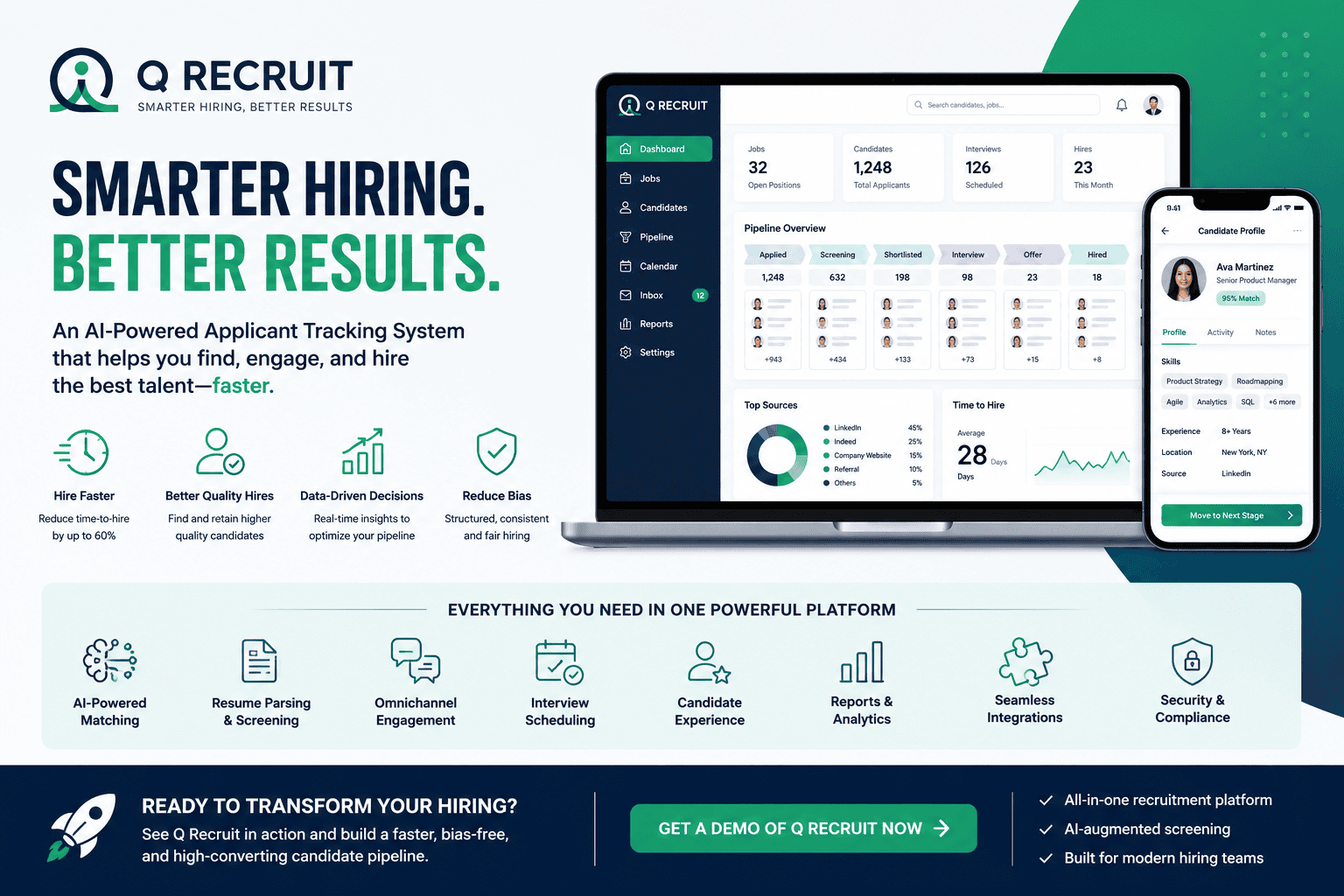
Don’t let top-tier talent slip through a clunky application funnel or get lost in messy spreadsheets. Take control of your hiring funnel and build a faster, bias-free, and high-converting candidate pipeline today with Q Recruit.
🚀 Scale Your Talent Acquisition Today
- See Q Recruit in Action: Discover how our all-in-one, end-to-end recruitment platform can automate your manual workflows and cut your time-to-hire by over 50%. [Get a Demo of Q Recruit Now]