
“I Need One Place To Manage Every Candidate.”
Today’s recruiters are constantly switching between emails, spreadsheets, notes, calendars, messaging tools, and hiring platforms.
As hiring volume grows, keeping candidate information organized becomes increasingly difficult.
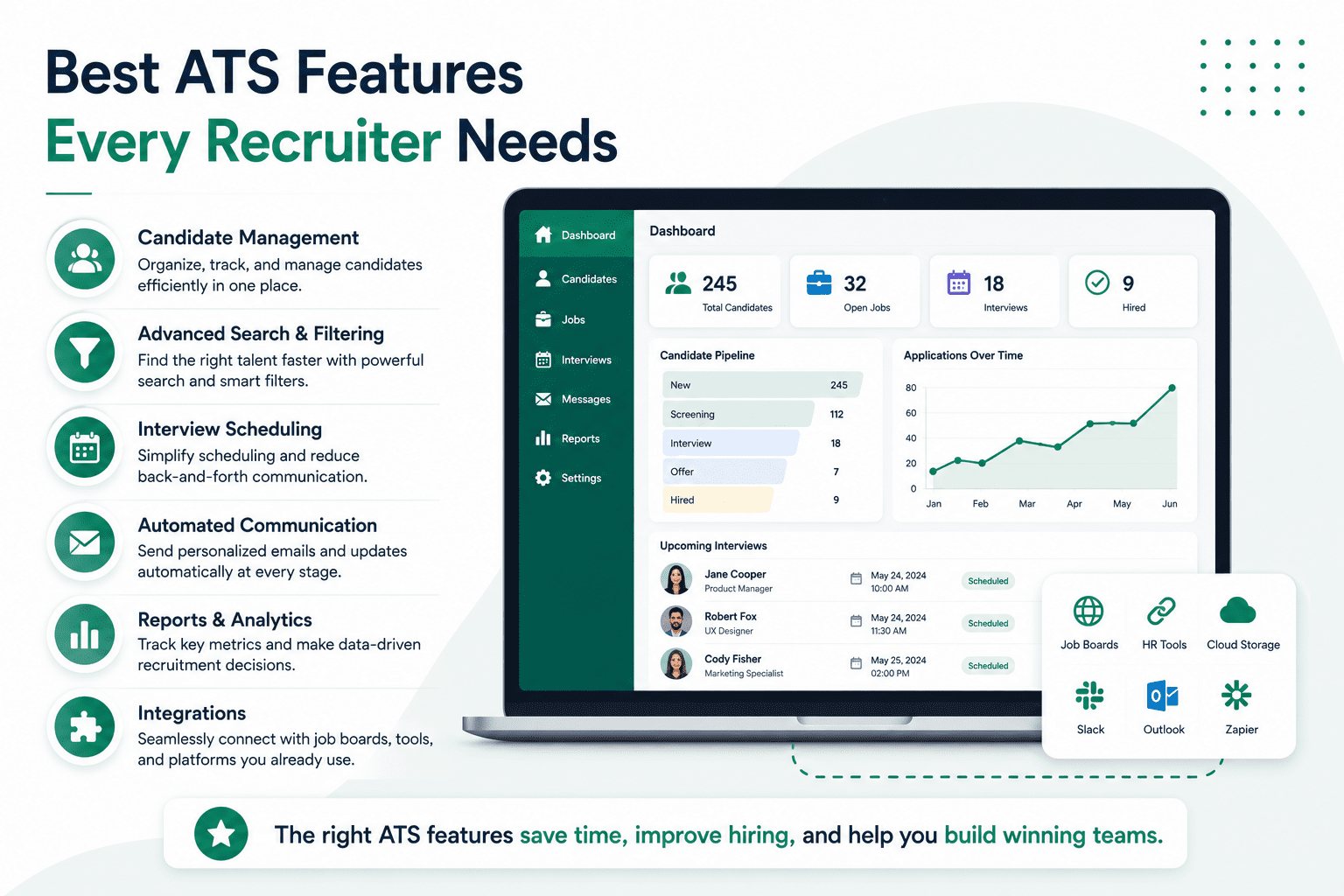
This is why recruiters consistently rank centralized candidate management as one of the most important ATS features.
They want one place where they can see:
- Candidate profiles
- Communication history
- Application status
- Interview feedback
- Hiring activity
- Engagement records
This is where Recruitment CRM functionality becomes critical.
A modern ATS combined with Recruitment CRM capabilities helps recruiters manage every candidate relationship from a single platform.
Instead of chasing information across multiple systems, recruiters gain a complete view of the candidate journey in one place.
And when everything is connected, hiring becomes faster, more organized, and significantly more efficient.
“I Need Visibility Into My Pipeline.”
One of the biggest frustrations recruiters face is not knowing exactly where candidates are getting stuck.
Applications are coming in.
Interviews are happening.
Feedback is being shared.
Yet many hiring teams still struggle to answer a simple question:
“Where are our hiring bottlenecks?”
Without clear pipeline visibility, recruiters often rely on assumptions rather than data.
Modern ATS software should provide real-time visibility into:
- Candidate progress
- Open positions
- Hiring stages
- Recruitment bottlenecks
- Team activity
- Pipeline health
The best recruiters don’t just manage candidates,they manage hiring momentum.
Pipeline visibility helps recruiters identify delays before they become problems and ensures candidates continue moving through the recruitment process efficiently.
Because a healthy pipeline leads to faster hiring decisions and better candidate experiences.
“The Right Candidate Is Already in My Database. I Just Need to Find Them.”
Every recruiter has experienced this situation.
A hiring manager opens a new position, and instead of sourcing candidates from scratch, the recruiter remembers speaking with a highly qualified candidate a few months ago. The challenge isn’t finding talent,it’s finding that specific candidate quickly.
Many recruiters today sit on thousands of resumes collected over months or even years. Yet without the right ATS, those resumes become a forgotten archive rather than a valuable talent pipeline.
This is why modern recruiters are demanding AI-powered search capabilities from their Applicant Tracking Systems. They want to search by skills, experience, job titles, locations, certifications, and hiring history in seconds,not hours.
A smart AI ATS helps recruiters unlock the value of their existing talent database, turning past applicants into future hires. Instead of constantly spending on sourcing, recruiters can rediscover qualified candidates already within their recruitment ecosystem.
“Stop Making Me Switch Between Five Different Tools.”
One of the biggest frustrations recruiters face isn’t the hiring itself,it’s managing multiple systems just to complete a single task.
A typical recruiter’s day often involves jumping between:
- An ATS
- Email platforms
- Scheduling tools
- Candidate databases
- Communication software
- Reporting dashboards
Every tool switch creates friction, wastes time, and increases the risk of losing critical candidate information.
Recruiters today want a unified hiring experience.
They need a platform where candidate management, Recruitment CRM, communication, pipeline tracking, interview coordination, and hiring analytics work together seamlessly.
The best ATS platforms are no longer just applicant tracking systems,they are complete recruitment ecosystems that centralize every stage of the hiring process.
When everything lives in one place, recruiters spend less time managing tools and more time building relationships with candidates.
“Interview Scheduling Shouldn’t Take Longer Than the Interview.”
Ask recruiters where hiring momentum is lost, and interview scheduling will almost always be near the top of the list.
Finding a time that works for candidates, recruiters, hiring managers, and interview panels often becomes an administrative nightmare.
The irony?
The scheduling process can sometimes take longer than the actual interview itself.
In today’s competitive talent market, every delay matters. Top candidates are evaluating multiple opportunities simultaneously, and a slow interview process can quickly lead to candidate drop-offs.
This is why recruiters increasingly value ATS platforms that automate interview coordination and streamline hiring workflows.
Modern recruitment technology should remove scheduling bottlenecks, reduce back-and-forth communication, and help teams move candidates through the hiring process faster.
Because hiring speed is no longer just an operational metric,it’s a competitive advantage.
“I Need Insights, Not More Data.”
Recruiters aren’t struggling with a lack of information.
They’re struggling with too much information and not enough actionable insight.
Every hiring process generates data:
- Applications received
- Interview completion rates
- Candidate sources
- Time-to-hire
- Pipeline conversion rates
- Offer acceptance metrics
The problem is that raw data alone doesn’t improve hiring outcomes.
Recruiters need visibility into what’s working and what’s slowing them down.
They want answers to questions like:
- Which hiring stages create bottlenecks?
- Where are candidates dropping off?
- Which sourcing channels deliver the best talent?
- How can we reduce time-to-hire?
- Which roles take the longest to fill?
Modern ATS and Recruitment CRM platforms help transform recruitment data into hiring intelligence, allowing teams to make faster, smarter, and more strategic decisions.
Because at the end of the day, recruiters don’t need more dashboards.
“Why Am I Still Searching for Talent Manually?”
Recruiters today have access to more candidate data than ever before.
Yet many still spend hours manually searching through resumes, filtering applications, and trying to identify qualified candidates from a growing pool of talent.
One recruiter put it perfectly:
“I have thousands of resumes in my ATS. Why am I still doing all the searching myself?”
It’s a fair question.
An ATS should do more than simply collect applications. It should help recruiters discover talent faster and make hiring decisions with confidence.
Unfortunately, many traditional applicant tracking systems function as storage platforms rather than intelligent recruitment tools. Recruiters are left scrolling through profiles, applying multiple filters, and manually reviewing candidates that may or may not fit the role.
Modern AI ATS platforms are changing this approach.
Instead of making recruiters search endlessly for talent, AI-powered recruitment technology helps surface relevant candidates based on skills, experience, job requirements, and hiring criteria.
The result?
Less time spent searching.
More time spent engaging qualified candidates.
Because recruiters shouldn’t have to work harder to find talent that’s already within reach. They need an ATS that helps them identify the right candidates quickly, build stronger talent pipelines, and focus on what truly matters, building relationships and making successful hires.
The best ATS platforms don’t just store resumes.
They help recruiters find opportunities hidden within their talent database.
What Modern Recruiters Actually Need From an ATS
After speaking with recruitment professionals across industries, a clear pattern emerges.
Recruiters don’t want more software.
They want fewer hiring headaches.
The ATS features that consistently matter most include:
- AI-powered candidate matching
- Recruitment CRM capabilities
- Recruitment automation
- Candidate engagement tools
- Talent pipeline management
- Recruitment analytics
- Centralized candidate data
- Workflow automation
- Hiring visibility
- Faster collaboration
The goal isn’t simply managing applicants.
The goal is creating a recruitment process that is faster, smarter, and easier to scale.
Why Recruiters Are Moving Toward AI-Powered ATS Platforms
The future of recruitment is no longer about tracking applications.
It’s about creating intelligent hiring experiences.
Recruiters want systems that can:
- Reduce manual work
- Improve candidate experience
- Strengthen talent pipelines
- Accelerate hiring decisions
- Improve recruiter productivity
This shift is driving the adoption of AI ATS platforms and Recruitment CRM solutions across organizations of all sizes.
The Recruiter’s Edge
The best ATS isn’t necessarily the one with the longest feature list.
It’s the one that solves the problems recruiters face every day.
From AI-powered candidate matching and recruitment automation to Recruitment CRM workflows and talent pipeline management, modern hiring teams need technology that helps them spend less time managing processes and more time connecting with talent.
This is exactly what Q-Recruit is built for.
Designed for modern recruiters, Q-Recruit combines AI-powered ATS capabilities, Recruitment CRM functionality, candidate engagement tools, recruitment automation, hiring analytics, and centralized talent management into one intelligent platform.
Instead of juggling multiple systems, recruiters can manage the entire hiring journey from a single connected ecosystem, improving productivity, enhancing candidate experience, and building stronger talent pipelines.
As recruitment continues to evolve, the ATS platforms that succeed will be those that help recruiters hire smarter, not just faster.
Ready to experience an ATS built around what recruiters actually need?
Explore how Q-Recruit can help you streamline hiring, automate workflows, and build stronger candidate relationships.Book a demo now:
Q-Recruit